Facebook ads for dental practices are Meta campaigns that promote a specific treatment offer to people inside a practice's catchment area on Facebook and Instagram. Ads route to an instant form, a call, or a landing page, and the practice converts the enquiry into a booked appointment. Dentistry is not a Meta Special Ad Category, but health rules restrict personal-attribute copy and outcome claims, and HIPAA restricts what patient data may be sent. Profitability is decided by the offer and the front desk, not targeting.
A dental campaign can look excellent in Ads Manager and still lose the practice money, because the numbers that decide profitability are not in Ads Manager. They are in the practice management software: how many leads answered the phone, how many booked, how many showed up, and how much treatment they accepted in the chair.
That gap is why practices so often conclude that Facebook ads dental campaigns "don't work" after a three-month test. The leads were real. The measurement stopped one step too early.
What follows: what Meta actually restricts for dental advertisers, what the channel costs against current Facebook ads by industry benchmarks, which offers make sense per procedure, and how to build for a five-mile radius.
Why Dental Is a Different Meta Ads Problem
Intent is absent. Nobody scrolling Reels is shopping for a dentist. On Google someone announces their need by typing it; on Meta you create the moment. That is why offer-led ads carry these campaigns and brand awareness rarely books anyone on its own.
The audience is tiny. A practice draws from a few miles, leaving perhaps 50,000 to 300,000 addressable people against Meta's guidance that delivery generally works best at 2 to 10 million. Fewer auction opportunities, faster frequency accumulation, less room to slice by procedure. Creative fatigue also arrives sooner than most advertisers expect, so rotate genuinely different concepts rather than headline tweaks and watch for the pattern that signals ad fatigue.
Ticket size varies by two orders of magnitude. A cleaning and a full-arch reconstruction are both "a new patient". One blended cost-per-lead target across both is the most common planning error in dental media buying.
A human converts the lead. Liine's 2024 dentistry benchmark, drawn from roughly 50,000 new-patient enquiries at US practices, found scheduling rates across individual staff members ranging from 25.5% to 74.1%. Same leads, same practice, wildly different outcomes depending on who answered. No targeting change competes with that spread.
What Meta Actually Restricts for Dental Advertisers
Dentistry Is Not a Special Ad Category
Meta's Special Ad Categories are Housing, Employment, Financial Products and Services, and Social Issues, Elections or Politics. Health, dentistry and wellness are not on that list. An ordinary ad for cleanings, emergency appointments, implants, veneers or clear aligners needs no category declaration, and you keep normal age targeting, radius targeting and lookalikes. That surprises anyone who has run real estate or recruitment ads, where the restrictions are severe.
Two exceptions catch practices anyway. Advertising for a hygienist, associate or front desk role requires Employment. Ads promoting credit, deferred payment plans or dental insurance can fall under Financial Products and Services, and you do not escape that because the finance is attached to treatment.
One naming collision causes real confusion. "Health and wellness" is also a data source classification Meta introduced in Events Manager during its 2025 health-data restrictions, and it can limit which pixel and Conversions API events your dataset may send. It is not a campaign-level Special Ad Category, and the two get conflated constantly.
The Personal Attributes Rule Is Why Your Ad Got Rejected
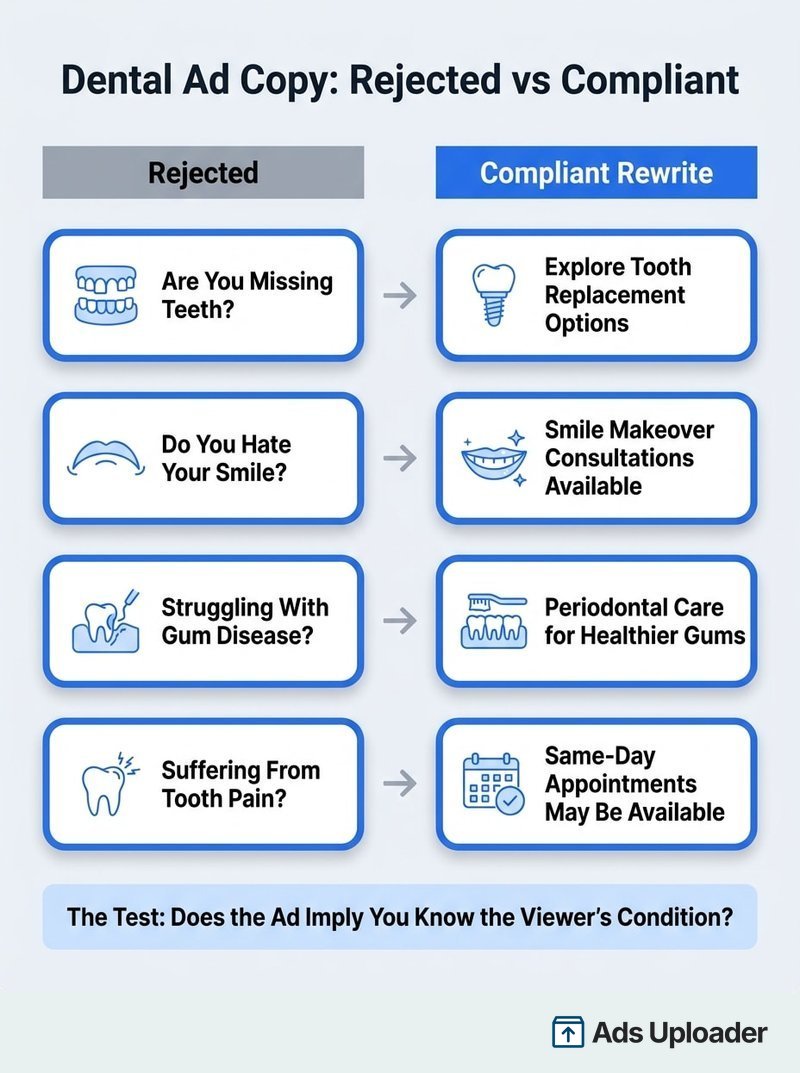
Meta's policy is one sentence: ads must not contain content that asserts or implies personal attributes. Health conditions are protected, and that sentence accounts for most dental rejections.
It is widely misread as a ban on "you" and "your". It is not. Meta's guidance has said those words are fine where the ad does not imply a prohibited attribute, and "Book your next dental appointment" is perfectly compliant. The real test: does the ad sound as though the advertiser already knows the viewer has a condition, insecurity or treatment need? Dental copy fails constantly, because the classic direct-response hook is built on exactly that assumption.
| Copy that gets rejected | Why it fails | Compliant rewrite |
|---|---|---|
| "Are you missing teeth?" | Implies a physical condition | "Explore tooth replacement options, including implants and bridges." |
| "Do you hate your smile?" | Implies a negative emotional state | "Smile makeover consultations are available at our practice." |
| "Struggling with gum disease?" | Implies a diagnosed condition | "Periodontal care supports healthier gums and ongoing oral health." |
| "Embarrassed by your teeth?" | Implies shame and a physical attribute | "Cosmetic dentistry options designed around individual goals." |
| "Suffering from tooth pain?" | Implies a present symptom | "Same-day appointments for tooth pain may be available." |
| "You deserve a pain-free implant." | Implies a condition, plus an absolute outcome | "Ask about sedation and comfort options for implant treatment." |
The right-hand column follows one pattern: describe the service and its availability, and let readers who need it recognise themselves. Campaigns rarely lose performance from that change.
Meta's review also covers the headline, text inside the image or video, your lead form questions, and the destination page. Moving "Are you missing teeth?" into the image or the landing page does not cure the violation, and Meta re-reviews live ads, so something that ran for three weeks can still be pulled.
Claims, Before-and-After Photos and Close-Ups
Meta's health guidance tells advertisers to avoid exaggerated or deceptive claims about success or benefits. The high-risk dental phrases are predictable: "guaranteed perfect smile", "pain-free implants", "permanent teeth in one day" with no qualification, "whiten ten shades in one visit". The compliant pattern preserves the need for clinical assessment: implant options may restore function for suitable candidates, and treatment plans vary.
Before-and-after images have genuinely changed, recently enough to warrant care. For years the health and wellness rule was applied as a broad prohibition on before-and-after imagery showing idealised results. A policy update reported as taking effect 22 July 2026 shifted enforcement from format-based to claims-based, stating that before-and-after images will no longer be automatically rejected simply because of the format. Two caveats: that change surfaced through policy trackers and a circulated advertiser email rather than a dated public changelog, so verify it in Meta's live policy first; and a permitted format does not make a given image compliant, since a comparison can still fail if it promises an unlikely result or trades on negative self-perception.
No current Meta rule categorically bans close-up dental photography, although graphic imagery involving blood, exposed tissue or surgical footage still breaches sensational content rules. A normal conversational crop, clinician imagery or office footage carries far less review risk than a frame filled with damaged teeth.
Meta approval is not a finding of legal compliance, either. The ADA Code prohibits advertising that is false or misleading in any material respect, the FTC requires health claims to be backed by competent and reliable scientific evidence, and state dental boards add their own rules on "free" offers and fee advertising. Outside the US the bar rises: UK advertisers need genuine, dated evidence for before-and-after photographs under CAP and ASA rules, and Australia's National Law prohibits testimonials about clinical aspects of a regulated health service outright.
Patient Data Is the Expensive Mistake
Everything above costs you a rejected ad. This one costs considerably more.
Meta's Business Tools Terms prohibit sending data that includes health, financial or other sensitive information where the advertiser knows or reasonably should know what the data contains. No public Meta documentation offers a HIPAA Business Associate Agreement for the pixel, the Conversions API or Custom Audiences, and a 2025 filing in the Meta pixel healthcare litigation confirms Meta had not entered BAAs with the providers at issue.
So for a US covered entity, the answer to "can we upload our patient list?" is effectively no. A practice management export identifies people specifically in the context of a provider relationship, and may reveal treatment, insurance or appointment detail besides. HHS requires valid patient authorisation to disclose protected health information for marketing, absent a narrow exception, and hashing does not solve it because Meta still receives and matches the identifiers. Dental is the vertical where you decline to use customer list audiences.
The tracking side is more nuanced than it was. HHS OCR issued a bulletin on online tracking technologies in December 2022 and revised it in March 2024. In June 2024 a federal court in American Hospital Association v. Becerra vacated the part treating an IP address plus a visit to an unauthenticated public page about a condition as automatically identifiable health information, and HHS dropped its appeal that August. A homepage visit is therefore no longer automatically PHI just because your site is about dentistry.
What survived is the operational part. Authenticated portals, appointment and treatment confirmation pages, symptom checkers and information deliberately entered into booking forms can all transmit PHI. An event name, URL or parameter can itself disclose treatment. And de-identifying data after the vendor received it does not undo the disclosure. The current HHS guidance on online tracking technologies sets out where the line now sits.
This is not theoretical for dentistry. Beyond the FTC's health-data actions against GoodRx, BetterHelp and Cerebral, and hospital pixel settlements including Novant Health at $6.66 million, Aspen Dental faced a class action alleging its pixel, cookie and Conversions API setup disclosed patient status, treatment interests and appointment information. A proposed settlement exceeding $18.4 million received preliminary approval in June 2025.
Meta does apply health data filtering, restricting events from sources classified as health and wellness and stripping parameters it considers sensitive. That is useful, not a safe harbour. It might catch an event named ImplantConsultBooked; it cannot determine whether you had legal authority to disclose a given field.
Do not send: patient or chart IDs, practice management exports, diagnosis or treatment fields, insurance and claims data, appointment records tied to identifiable patients, or treatment-revealing event names and URL parameters such as MissingTeeth, GumDisease or InvisalignPatient.
Lower risk: a Meta-native lead who has requested contact and is not yet a patient, captured with name, contact details, location and a broad preferred time, fired as a generic Lead event where the URL and payload reveal nothing clinical.
Server-side is not automatically safer. The Conversions API can be more dangerous than the browser pixel precisely because it makes sending rich CRM records easy, and both are governed by the same terms. Keep Meta tags off authenticated pages, inspect the actual payloads rather than trusting your tag manager configuration, and have privacy counsel approve the data flow before sending any downstream booked or accepted event.
What Dental Facebook Ads Actually Cost
Cost per Lead
The most recent dental-specific benchmark is WordStream and LocaliQ's 2025 Facebook advertising benchmarks, covering 726 US lead campaigns running April 2024 through June 2025.
| Dentists and dental services, lead campaigns | 2024 report | 2025 report |
|---|---|---|
| Click-through rate | 1.54% | 1.05% |
| Cost per click | $4.10 | $9.78 |
| Conversion rate | 9.83% | 6.38% |
| Cost per lead | $32.46 | $76.71 |
Read the jump carefully: the editions use different samples, date ranges and advertiser mixes, so this is not a controlled measurement of the same accounts. What it does establish is that roughly $75 is a far more defensible planning figure than the $20 to $30 numbers still quoted across dental marketing sites.
From Lead to Booked Appointment
Liine's 2024 dentistry marketing benchmark found Facebook produced 23.1% of marketing-generated leads but only 36.2% of them scheduled, against 48.2% for paid search and 69.7% for organic. Notably, 72.9% of first enquiries arrived by phone rather than by form.
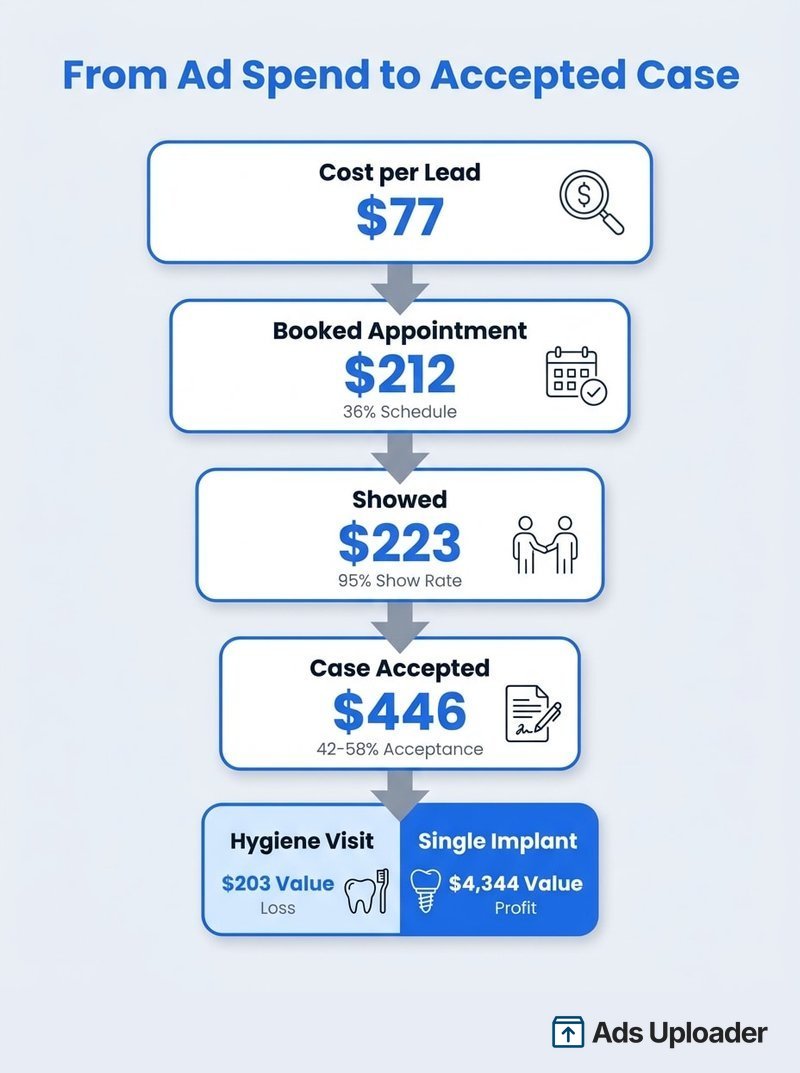
Combine that 36.2% scheduling rate with the $76.71 median CPL and you get roughly $212 per booked appointment. Treat it as a cross-dataset calculation rather than an observed standard; $200 to $300 is a defensible planning range before no-shows.
Then apply the downstream rates. Planet DDS's 2026 DSO Outlook, covering 2025 data from around 8,500 mostly DSO-affiliated practices, reported 58% case acceptance and a 6.9% no-show rate. Henry Schein One's 2026 Catalyst Index, drawn from practices with one to seven locations, reported 42% average case acceptance against 75% for the top decile. They disagree because they measure different populations, so plan against the 42% to 58% range rather than either figure alone.
Run the chain and the verdict flips entirely depending on what you sell:
| Hygiene and new patient exam | Single implant | |
|---|---|---|
| Cost per lead | $77 | $77 |
| Scheduled at 36% | $212 per booking | $212 per booking |
| Showed at 95% | $223 | $223 |
| Case accepted at 50% | $446 per accepted case | $446 per accepted case |
| Typical US treatment value | ~$203 exam, cleaning and X-rays | ~$4,344 per tooth |
| Verdict | Loses money on the first visit | Profitable many times over |
Procedure prices are US averages from CareCredit's ASQ360 consumer research. The hygiene column is not an argument against hygiene campaigns. It is the reason they have to be justified on recall, retention and treatment diagnosed at the exam rather than first-visit revenue, and the reason to run high-ticket campaigns instead if you cannot measure that.
Two levers beat any targeting change. Speed to first contact comes first: lead-response research has consistently found large multiples in qualification odds for responding within minutes rather than hours, and Invoca's 2025 healthcare benchmark across 60 million calls found only 48% of callers reached a person at all. Second is show rate, which is a reminder process, not a media problem. Liine's most common reasons for not booking were Medicaid not accepted (21.0%), procrastination (17.6%), out-of-network status (13.4%) and scheduling conflicts (12.0%), and three of those four are addressable with better qualification at the ad stage.
Build Your Own Swipe File
Stop scrolling the Ad Library by hand. Search, filter, and save proven ads with a free Chrome extension built for media buyers.
Get Ad Library Helper FreeFree Chrome extension • Built by Ads Uploader
What to Budget
No Meta-only spending benchmark exists for dental. What does exist is the ADA's guidance on total marketing spend: roughly 3% to 6% of revenue for a new practice, 2% to 3% for a mature one, and 5% to 7% in the first year after an acquisition.
For a single location, $2,000 to $5,000 a month held for 90 days is a reasonable test. At the current median CPL that buys about 26 to 65 leads a month, implying roughly 9 to 24 booked appointments before no-shows. If your team cannot follow up on that volume within minutes, spend less until it can.
Offers That Work, by Procedure
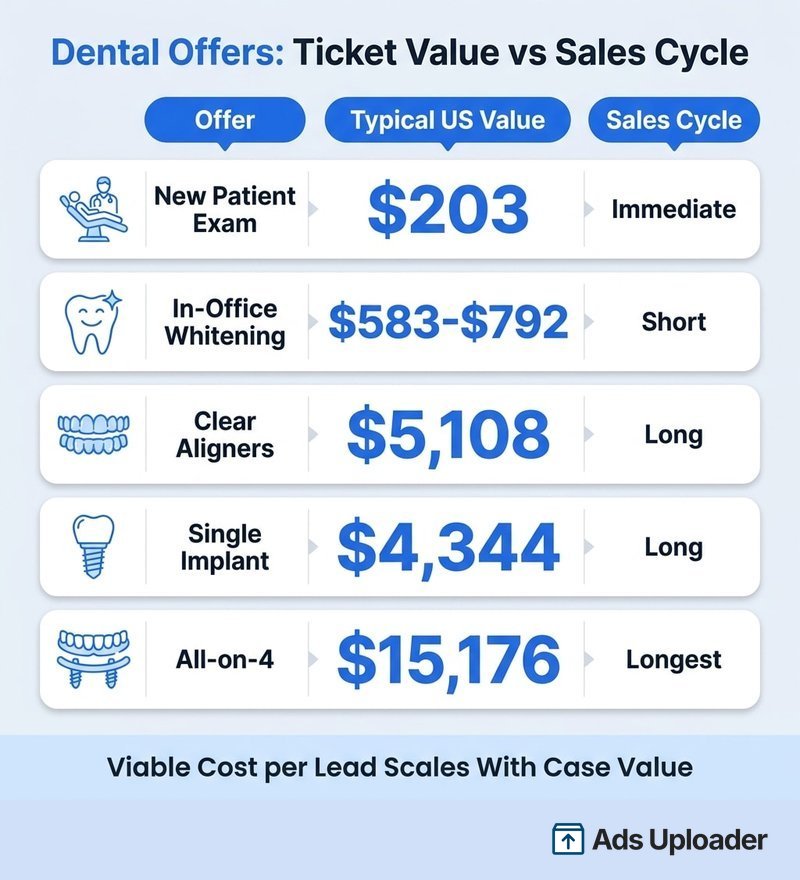
The useful version of "have a strong offer" is that the offer, the sales cycle and the viable cost per lead all move together by procedure.
New patient exam and hygiene. The volume play, typically $79 to $129 for an exam, necessary X-rays and a cleaning, or a free emergency exam. Against a US average near $203 for that visit, it is a loss leader by design, and it only works if you measure recall attendance and treatment diagnosed at the exam.
Whitening. Usually $99 to $199 in-office, or free whitening bundled with a paid new patient visit. In-office whitening averages $583 to $792 depending on method, so there is margin, but whitening works better as an entry point than a profit centre.
Clear aligners. A free digital scan or smile assessment, sometimes a fixed discount such as $1,500 off a case. US case value averages around $5,108 and the consideration window is long, so retargeting and structured follow-up matter far more than first-touch CPL. Monthly-payment headlines pull you into the Financial Products and Services category and require credit term disclosures.
Implants and full arch. Highest ticket, longest cycle. Real offers in market include single implants around $2,499, implant bridges around $6,299, and up to $2,000 off All-on-4, against US averages near $4,344 for a standard endosteal implant and $15,176 for All-on-4. A $150 lead looks alarming here and is usually excellent. State whether extraction, grafting, imaging, sedation and the final prosthesis are included, because a mismatch between ad and consultation is both a policy risk and a booking killer.
Emergency and same-day. The highest intent on the platform and the smallest audience. Run it always-on at low budget, with call ads scheduled only during staffed hours.
One angle worth building creative around is dental fear. A 2021 systematic review put adult dental fear prevalence at 15.3%, while a 2025 JADA study of 1,003 US adults reported 72.6% with some degree of fear and 26.8% with severe fear. The instruments differ, which explains the gap, but both point at a large addressable anxiety. Speak to it by describing your process rather than the viewer's feelings: "a calm, step-by-step approach for patients who prefer extra time" works, while "nervous about the dentist?" is a personal attributes violation.
Building the Campaign
Objective and Structure
Meta's objectives are Awareness, Traffic, Engagement, Leads, App Promotion and Sales. For patient acquisition, Leads is right for forms, calls and Messenger conversations. Awareness suits practice launches. Traffic optimises for clicks rather than appointments, and Sales only makes sense where a compliant, measurable deep event exists, which the health-data restrictions often prevent.
Structure matters more than usual because the audience is small. Meta's guidance is that delivery stabilises after roughly 50 optimisation events within seven days, and almost no practice generates 50 booked appointments a week. Optimise to a neutral, higher-volume event such as a generic lead, and improve quality through form design and follow-up rather than by sending treatment-linked patient events to feed the algorithm. Consolidate rather than fragment, too: a local audience split across four procedures and eight ad sets will not exit the learning phase in any of them.
Targeting a Five-Mile Radius
Location is the one control that genuinely holds. Meta treats location, minimum age, language and custom audience exclusions as strict controls even when Advantage+ audience expands everything else, so set the serviceable geography carefully and let Meta handle the rest.
Resist stacking interests on top. Meta suggests interest targeting only where the resulting audience stays above 2 million, which no practice catchment will, and geography is already a severe constraint. Advantage+ is now on by default for eligible Leads campaigns, and Meta reports 14% lower CPL from it, though that is platform-wide rather than dental-specific. Meta also removed detailed targeting exclusions in March 2025.
Meta also infers location from a mix of signals rather than running a real-time geofence, so out-of-area leads will happen. Ask for a ZIP or postcode on the form and analyse invalid leads separately, and where ZIP or city boundaries fit the service area better than a circle, use them instead.
Instant Form or Landing Page
Instant forms produce more leads at lower cost. Meta reports that advertisers running instant forms alongside website forms saw 60% lower CPL and 125% more lead volume than website forms alone. What Meta does not report, and what no independent dental study establishes, is a booked-appointment advantage. Instant forms win on volume and cost; landing pages win on qualification, because they give you room for credentials, offer terms, pricing context and a real booking calendar. Test both and judge them on shows and accepted production.
Keep the fields minimal and non-clinical either way: name, phone or email, location, preferred contact time, and at most a broad service category. Do not ask about diagnosis, symptoms, treatment history or insurance details as a lead-quality tactic. Meta reviews those questions, and they turn an ordinary lead record into something closer to health data.
Creative That Survives Both the Feed and the Reviewer
Real team and office footage beats stock photography, and it carries less policy risk than close-up clinical imagery. The concepts that work here are unglamorous: a clinician talking to camera, an office tour, a "what happens at your first visit" explainer, a static offer creative with the qualifications legible, an FAQ carousel for implants or aligners, or a patient story built like the testimonial Facebook ad examples we collected.
Put the offer and the location in the first line of the primary text, before the truncation point. Rotate several materially different concepts rather than variations of one idea, because a small audience burns through them quickly.
Multi-Location Practices and DSOs
Group practices are now a meaningful share of the market. ADA Health Policy Institute data shows 16.1% of US dentists were DSO-affiliated in 2024, up from 7.2% in 2015, and 27% among dentists fewer than ten years out of school.
No published study establishes that one ad account per location beats one central account. A workable central model uses a single verified Business Portfolio, correct location Pages, and a small number of ad accounts determined by legal entity, currency and billing rather than by office count, with campaign-level segmentation by market and service line.
The operational cost is combinatorial: three offers across eight locations is 24 ad sets with 24 phone numbers and 24 form variants, rebuilt every time the seasonal offer changes. Consistent ad naming conventions make that reportable by location and by offer afterward.
Tracking What Actually Happened
Because most dental enquiries arrive by phone, form-only tracking undercounts the channel badly. Use call tracking numbers at campaign or location level and reconcile them against booked and shown appointments in the practice management software.
Meta retired the separate Offline Conversions API in May 2025 in favour of datasets plus the Conversions API. A typical local business would send a chain like Lead, Contacted, Qualified, Appointment Booked. A covered dental practice should not copy that without review, since an AppointmentBooked event tied to an identified person on a treatment-specific campaign can reveal a provider relationship.
The conservative architecture keeps booked, showed and accepted outcomes inside your own CRM, matched to campaign and lead IDs for reporting, without sending the sensitive outcome back to Meta. You lose some optimisation signal and keep the reporting. When connecting lead ads to a CRM in dental, the constraint is which fields make the trip.
Real Dental Facebook Ads Running in 2026
The examples below are live dental ads pulled from Meta's Ad Library, each still running after 30 or more days and spanning implants, clear aligners and new-patient exam offers. They show the formats and offers discussed above as advertisers actually deploy them, from single-location practices to national implant brands. The Ad Library exposes creative and copy, not spend or results, so read these for structure and compliance rather than performance.
Nuvia's video is built on one speed claim: permanent teeth in 24 hours against a traditional process of 10 or more months, with credibility borrowed from a named onsite clinical team rather than a discount. Worth copying is the move of anchoring a bold promise to a concrete mechanism, so it reads as process rather than hype. On compliance, "life-changing smile restoration" and a fixed 24-hour outcome sit near the outcome-claim line, so a suitability qualifier belongs on the destination page.

ClearChoice pairs a patient testimonial with a specific, quantified offer: a free consultation and 3D scan framed as a $500 value. The video carries the emotional pull while the link bar holds the booking ask, a clean split of jobs across the creative. Note that testimonials about clinical results draw extra scrutiny and are restricted outright in some markets, so this exact creative would not run unchanged in the UK or Australia.

Regional Implant Centers leads with insurance rather than price, asking whether the viewer holds a Blue Cross Blue Shield PPO and routing them to an eligibility quiz aimed at full-mouth cases. Qualifying on coverage up front is the copyable idea, since it filters for higher-intent, higher-value enquiries. The hedged wording, "may qualify" and "may cover", is doing careful compliance work: a definite coverage promise would be an unsupportable claim.

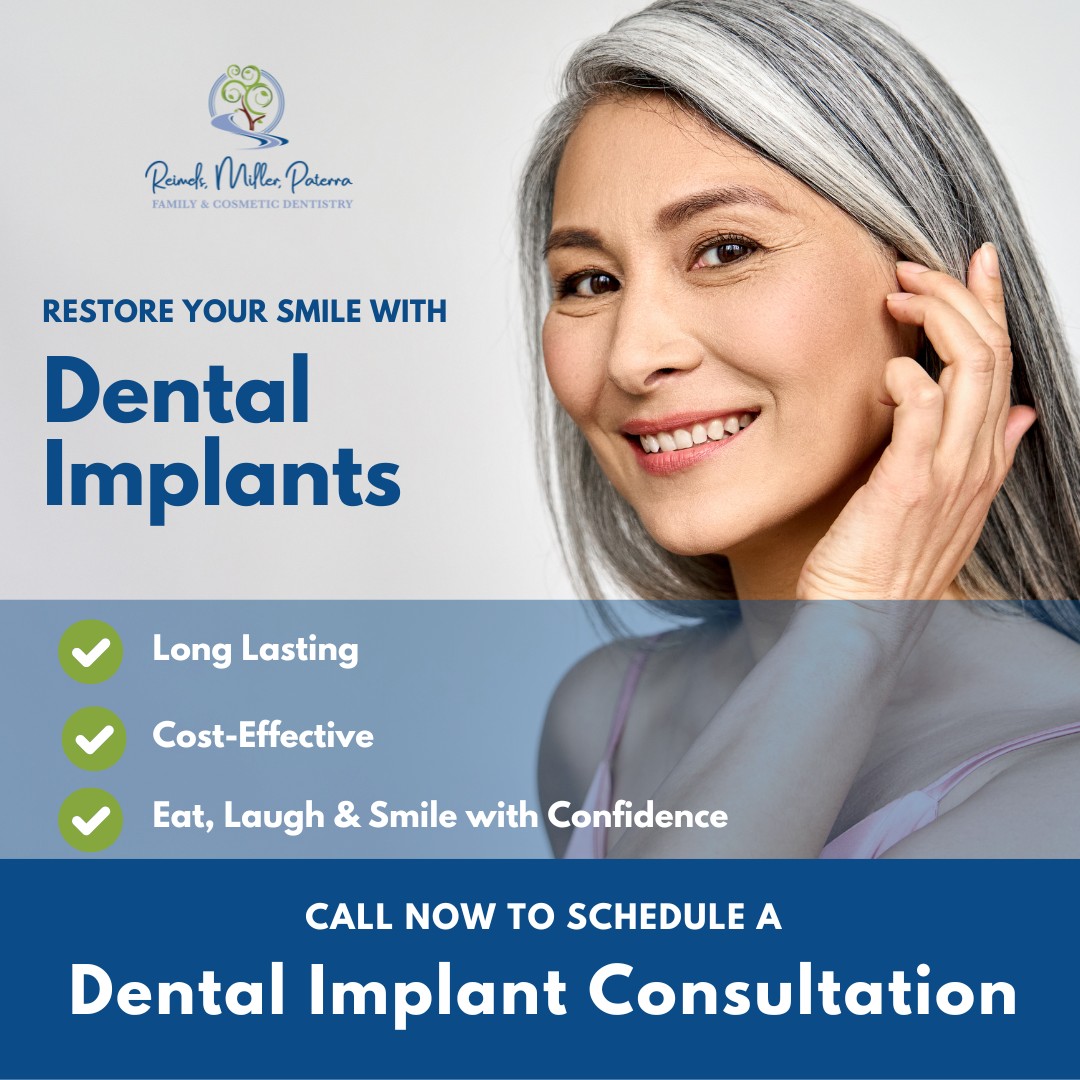
Reimels runs a detailed implant ad around a paid tripwire, a comprehensive implant consultation for $300, backed by a bulleted list of sedation and financing options. A low-cost paid consult can pre-qualify serious patients better than a free one, which is the worth-copying angle. The compliance lesson is in the opening line, "Missing teeth? 😢", which is exactly the second-person, condition-implying hook Meta's personal attributes policy rejects; opening on the practice's process would carry far less review risk.

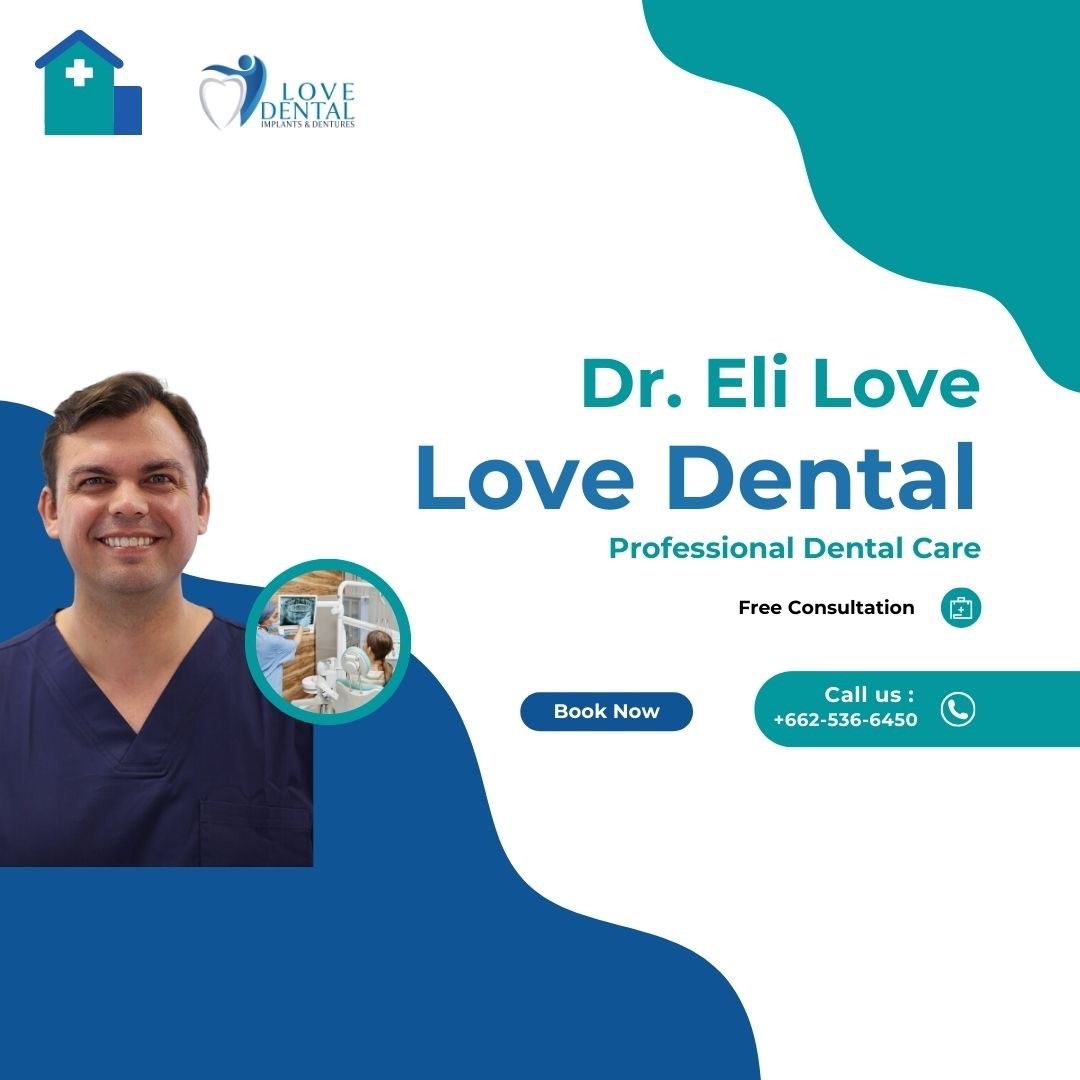
Love Dental stacks three offers in one ad: a free consultation for new patients, a "best price" promise with no hidden fees, and a comfort angle, with the CTA routing straight to an online booking page. The new-patient framing on the free consult makes the offer feel earned rather than a blanket discount, which is the piece worth borrowing. On compliance, "Best price on dental implants" is an absolute claim a state dental board or the FTC could ask you to substantiate.

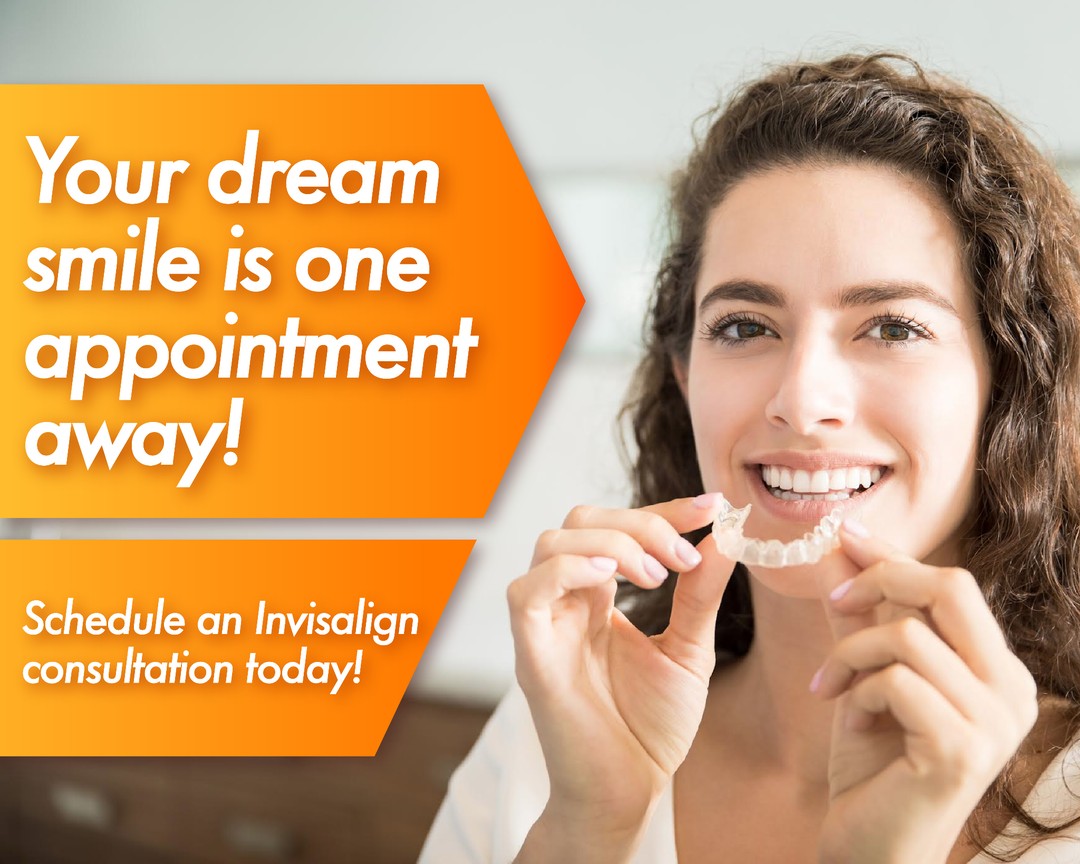
Olsen keeps it plain: Invisalign and braces for all ages, with free consultations offered in person or virtually and no urgency or discount attached. The virtual consultation option is worth copying, since it lowers friction on a considered purchase like aligners. This is also the cleanest compliance profile in the set, describing the service without touching the viewer's attributes or promising a result.


Riverdale advertises Invisalign with a concrete price anchor, treatment options starting at $3,400 for a six-month case, alongside the usual comfort and convenience bullets. Leading an aligner ad with a starting price sets expectations and screens out the sticker-shocked, which is the copyable move. The compliance flag is "Faster results compared to braces", a comparative outcome claim that should be defensible per case rather than stated as a universal.

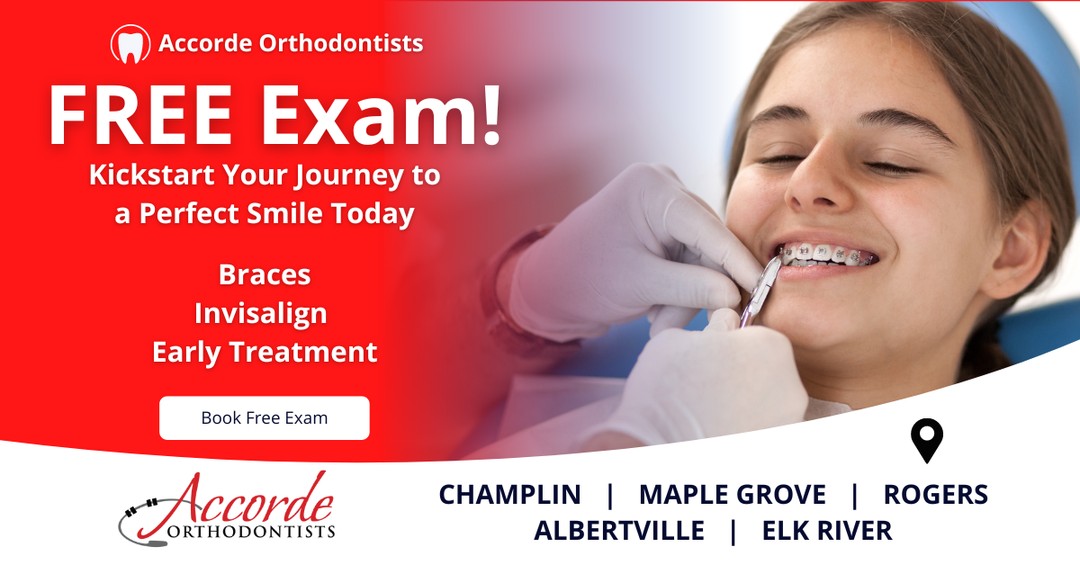
Accorde runs a pure new-patient exam offer: a free orthodontic exam framed as a limited-time, limited-spots opportunity, with an itemized list of what the exam includes. Itemizing the free exam into an evaluation, a treatment plan and a consultation makes "free" feel substantial rather than a bait hook, and that is the part to copy. The "Limited Spots Available" line is a scarcity device that should be true, since fabricated urgency can draw both Meta and FTC scrutiny.

Save Hours on Creative Testing
Stop uploading ads one by one. Bulk process unlimited creatives with automatic media matching and direct API publishing.
Try Ads Uploader FreeNo credit card required • 7-day free trial
Frequently Asked Questions
Do Facebook Ads Work for Dental Practices?
They generate demand well and convert it unevenly. Liine's 2024 benchmark found Facebook supplied 23.1% of tracked marketing leads but only 36.2% of them scheduled, against 48.2% for paid search and 69.7% for organic. The channel works for practices that measure booked and shown appointments rather than raw lead counts.
How Much Should a Dental Practice Spend Per Month?
No authoritative Meta-only benchmark exists. A single-location test of $2,000 to $5,000 a month, held for 90 days, buys roughly 26 to 65 leads at current medians. Keep total marketing near the ADA's guidance of 2% to 3% of revenue for a mature practice, or 3% to 6% for a new one.
What Is a Good Cost per Lead for Dental Facebook Ads?
The latest published US median is $76.71, from WordStream and LocaliQ's 2025 benchmarks across 726 lead campaigns. Their prior report showed $32.46, so variation between samples is large. Use roughly $75 as a reference rather than the $20 to $30 figures still quoted widely, and judge a CPL by whether it produces profitable accepted cases.
Are Dental Ads a Special Ad Category on Meta?
No. The categories are Housing, Employment, Financial Products and Services, and Social Issues, Elections or Politics. Dentistry is not among them. Recruitment ads for practice staff require Employment, and patient financing or insurance ads can require Financial Products and Services.
Why Do My Dental Ads Keep Getting Rejected?
Most often the Personal Attributes policy, which prohibits asserting or implying a viewer's health condition. Also common: absolute outcome claims, graphic close-ups, sensitive lead form questions, and landing pages whose offer terms do not match the ad. Meta reviews image text, form questions and the destination page, so relocating the offending line does not help.
Can You Use Before-and-After Photos in Dental Facebook Ads?
Increasingly yes. A Meta health and wellness policy update reported as effective 22 July 2026 moved enforcement from format-based to claims-based, so a before-and-after should no longer be rejected purely for being one. It can still fail if it implies an unlikely result or exploits negative self-perception, and consent, FTC substantiation and dental board rules apply separately.
Can a Dental Practice Upload Its Patient List to Custom Audiences?
In almost all cases, no. Meta's terms prohibit sending health or other sensitive data, and Meta does not publicly offer a HIPAA Business Associate Agreement. A practice management export identifies people in the context of a provider relationship, and hashing does not undo the disclosure. Aspen Dental's tracking class action reached a proposed settlement exceeding $18.4 million.
Is Meta Better for Hygiene Volume or High-Ticket Cases?
No credible head-to-head study settles it. Hygiene offers reach a broader audience with a simpler decision but can attract discount and insurance mismatches. Implant, aligner and cosmetic campaigns cost more per booking and support far more media spend per case. Most practices should run both, letting capacity and consultation follow-up decide the split.
The Short Version
Dental is not a restricted vertical on Meta the way real estate and recruitment are. There is no Special Ad Category to declare and you keep full targeting. What binds instead is the Personal Attributes rule, which rules out the second-person condition hooks dental copy has always leaned on, and the health data rules, which make uploading a patient list a genuinely expensive mistake rather than a policy annoyance.
On economics, the current numbers are roughly $77 per lead, about a third of those leads scheduling, and therefore $200 to $300 per booked appointment before no-shows. Whether that is good or terrible depends on what you sell: fatal for a $203 hygiene visit judged on first-visit revenue, trivial for a $4,300 implant case.
So measure to the end of the chain. Cost per lead tells you almost nothing on its own; cost per accepted case tells you whether to scale. And before you touch targeting, check how fast the front desk answers, because the spread between your best and worst staff member at booking a lead is wider than anything you can buy in the auction.