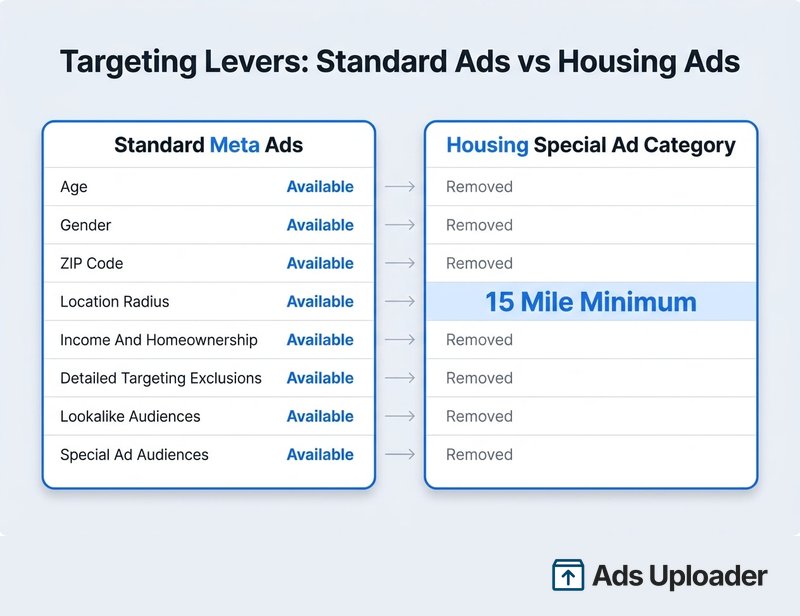
Real estate ads for Facebook are Meta campaigns promoting listings, valuations, open houses, or agent services across Facebook and Instagram. They run under Meta's Housing Special Ad Category, which removes age, gender, and ZIP code targeting and sets a 15-mile minimum location radius. Common formats include single image, carousel, video, lead ads with Instant Forms, and Advantage+ catalog ads fed by a home listing feed. Because the audience controls are limited by policy, results are driven by the offer, the creative, and the follow-up rather than audience selection.
Most setup guides for this topic walk you through picking an audience by age band, household income, homeownership status, and a tight ZIP code radius. If you have tried to build that ad set recently, you already know those controls are not there. Housing advertisers lost them, and the loss is permanent enough that it should shape how you plan every campaign.
That is not a reason to spend less on Meta. It is a reason to move the effort somewhere else, which is what separates housing from most of the verticals in our Facebook ads by industry guide. This guide covers what the Housing category actually permits, the five offers that reliably produce real estate leads, which format fits each one, what the current cost benchmarks look like and how much weight they deserve, and how teams get dozens of listings live without rebuilding every ad by hand.
What Counts as a Real Estate Ad on Facebook
Agents advertise five broad things on Meta, and almost every campaign is a variation on one of them: an individual listing, a home valuation offer, an open house or event, proof of recent results such as a just sold post or market update, and the agent or team brand itself.
The category net is wider than most people expect. The definition used in the Department of Justice settlement with Meta covers ads for a specific opportunity to rent, lease, sell, hold, convey, transfer, or buy a dwelling, plus related financing, homeowners insurance, and appraisal activity. A home valuation offer counts. An open house counts. Buyer and seller lead generation tied to a residential transaction counts, because the offer and the destination determine what is being solicited, not just the image you picked.
Pure education or corporate news with no housing opportunity attached may sit outside the category, but Meta does not publish a complete bright-line list, so the ad and its landing page have to be assessed together. Some cases stay genuinely unresolved in the public documentation, generic home repair services among them. When in doubt, check what Ads Manager classifies the campaign as before you build the creative around an audience you will not be allowed to use.
Real estate ads for Facebook run everywhere Meta places inventory: Facebook and Instagram feeds, Stories, Reels, and in-stream video. Before building anything, it is worth studying live real estate ads in the Ad Library, where housing ads have their own searchable ad type.
The Housing Category Changes What You Can Target
Meta requires advertisers to declare a Special Ad Category during campaign creation for ads relating to housing, employment, financial products and services, or social issues. Declaring Housing is not optional, and ad review examines creative, text, targeting, and destination together. A noncompliant ad gets rejected; repeated or severe violations can restrict the ad account, Page, or Business Account.
Here is what the declaration does to your targeting options.
| Lever | Available for housing ads? | What to use instead |
|---|---|---|
| Age | No advertiser-selected age band | Let the offer qualify: price point, property type, life-stage-neutral facts |
| Gender | No | Nothing needed; creative does the work |
| ZIP or postal code | Not selectable as the targeting unit | City, address, or pin with an allowed radius |
| Radius | Minimum 15 miles, roughly 24 km | Match the radius to a genuine service area |
| Income, homeownership | Direct controls unavailable | Price and property detail in the ad itself |
| Interests and behaviors | A smaller, account-dependent set may remain | Do not build the plan around it |
| Detailed targeting exclusions | Unavailable | Offer segmentation and creative |
| Lookalike Audiences | No, in the US Housing flow | Broad eligible delivery plus conversion quality signals |
| Special Ad Audiences | Retired | Not a substitute; they no longer exist |
| First-party Custom Audiences | Technically available in some flows | Requires certification and data rights |
The 15-mile radius is the number that reshapes local strategy most. A dropped pin on a single neighbourhood still reaches everyone within 15 miles of it, so the "farm area" precision that older guides promise is not achievable through targeting. It has to come from the ad.
A little history explains why none of this is coming back. Meta removed age, gender, and ZIP code targeting for these categories in 2019 and introduced Special Ad Audiences as a modified alternative to lookalikes. The 2022 settlement with the Department of Justice ended both Special Ad Audiences and Lookalike Audiences for US housing ads, and in January 2023 Meta launched the Variance Reduction System, which adjusts delivery so the estimated sex and race or ethnicity distribution of people seeing an eligible housing ad more closely matches the eligible audience. Meta has confirmed the restricted flow for the United States, Canada, and the European Union; for other markets, check the category selector in your own account rather than assuming.
One clarification worth making, since the settlement's four-year term reached its scheduled end in June 2026: that does not mean the rules lapsed. Special Ad Categories are still in Meta's current campaign documentation, and the fair housing law underneath them never depended on the settlement at all.
A few workarounds circulate that do not work. Advantage+ audience expansion does not restore prohibited controls; it expands delivery, and the generic product page describing age and detailed targeting as "suggestions" is not permission for housing advertisers. Value Rules, which Meta introduced in 2025 to vary bids by audience attribute, are documented as unavailable for Housing, Employment, and Financial Products. Reaching for a proxy instead, such as language or a hyper-narrow interest that stands in for a protected class, carries more risk than the targeting ever did, because HUD's 2024 guidance on digital advertising explicitly treats narrow geography, language, and proxy interests as sources of liability.
For housing work, the audience is mostly decided for you.
The Five Offers That Generate Real Estate Leads
With the audience largely fixed, the offer becomes the qualifying mechanism. A well-specified offer means the wrong people scroll past and the right ones stop, which is exactly what age and income filters used to do.
The Single Listing Ad
One property, real details, one action. The specifics carry the qualification: price, beds and baths, square footage, neighbourhood, and availability. "Listed at $925,000, three beds, two baths, 1,850 sq ft, two blocks from the station" self-selects a buyer far more efficiently than "your dream home awaits."
What to take from it: the price is not something to hide until the click. It is the single most effective filter you have left.
The Home Valuation Offer
The seller-side workhorse. It works because it offers something before asking for anything, and because homeowners considering a move will trade an email for a number. Be specific about the deliverable and the method, since a vague "find out what your home is worth" attracts curiosity clicks that never convert.
What to take from it: name what the seller receives and when. A defined output raises lead quality more than any form tweak.
Build Your Own Swipe File
Stop scrolling the Ad Library by hand. Search, filter, and save proven ads with a free Chrome extension built for media buyers.
Get Ad Library Helper FreeFree Chrome extension • Built by Ads Uploader
The Open House or Event Ad
Short-fused and geographically honest. The date does the qualifying, and the 15-mile radius is rarely a problem here because people travel for a property they like. Run it three to five days out, and treat the RSVP as the conversion.
What to take from it: a deadline is the one urgency device that is completely factual.
The Just Sold or Market Update Ad
Proof rather than inventory. It targets sellers who are deciding whether to list, and it says something true about the local market: what sold, how fast, at what relationship to asking. This is the offer that builds the recognition sellers draw on months later.
What to take from it: one specific number beats three adjectives. "Sold in nine days, 4% over asking" is the whole ad.
The Agent or Team Brand Ad
Direct to camera, no listing attached. In a business where 60% of agents in one 2026 survey named referrals and repeat clients as their best source, familiarity is not a soft metric. This is the ad that makes a later referral land.
What to take from it: it will not produce leads on a one-week read. Judge it on assisted conversions and inbound mentions, or do not run it.
Across all five, the lead ad format with a native Instant Form removes most of the friction on mobile.
Matching Format to the Offer
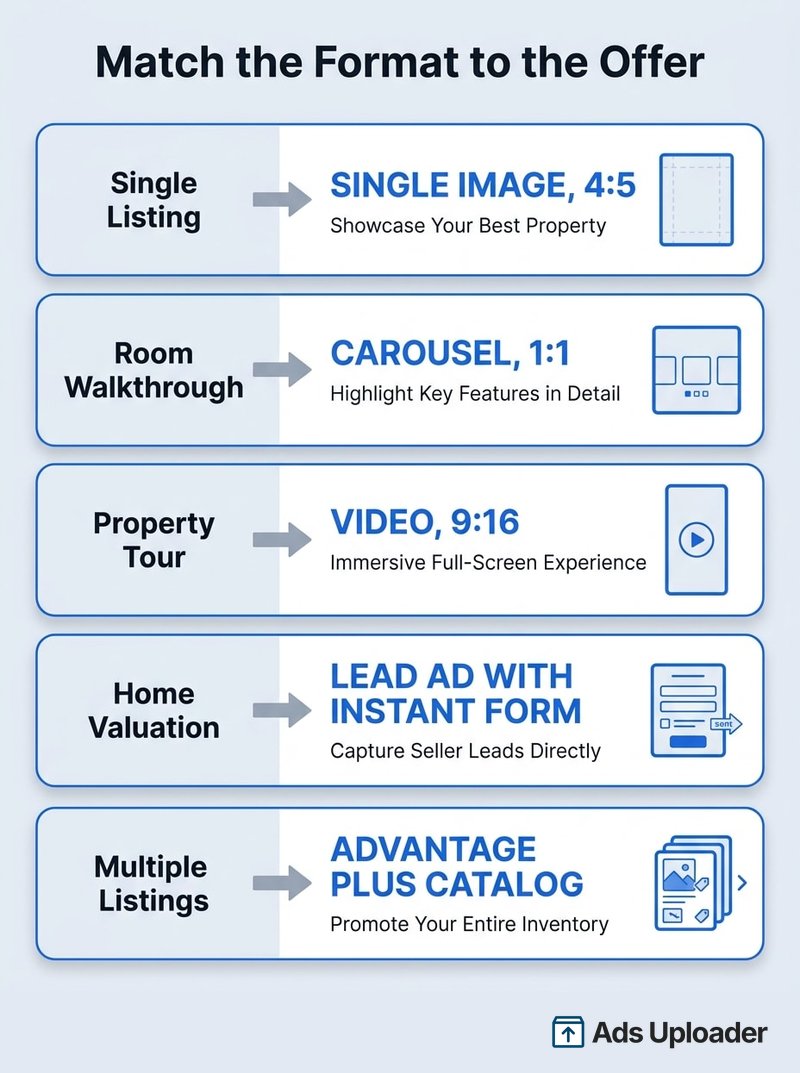
| Offer | Best starting format | Master file | Notes |
|---|---|---|---|
| Single listing | Single image, Feed | 1080x1350, 4:5 | Simplest, fastest to iterate. Keep a 1:1 fallback |
| Listing walkthrough | Carousel | 1080x1080, 1:1 per card | Up to 10 cards, each with its own link. Turn off auto-reorder when sequence matters |
| Property tour | Video, Reels and Stories | 1080x1920, 9:16 | Leave roughly 14% top and 20% bottom clear of key elements |
| Home valuation | Lead ad with Instant Form | Per placement | The form is the landing page. Ask enough to qualify |
| Open house | Single image or short video | 4:5 or 9:16 | Date and address are the creative |
| Multi-listing inventory | Advantage+ catalog ads | Feed-driven | Needs a maintained home listing feed |
Meta recommends 4:5 for Feed and 9:16 for Stories and Reels, and its own creative guidance now suggests primary text of roughly two to three lines rather than a hard character count. Text truncation varies by placement and device, so preview every placement rather than writing to a fixed number.
One honest caveat on format claims. No current controlled real estate study shows carousel beating single image, or proves an optimal property video length. Meta's most-cited format result, a 34.5% lower cost per result for native 9:16 Reels video with audio, came from 15 split tests across ecommerce, retail, and consumer packaged goods. It is good evidence about placement-native creative and weak evidence about listings specifically.
Advantage+ Catalog Ads for Listings
What used to be called dynamic ads for real estate is now Advantage+ catalog ads, built on a Home Listings catalog rather than an ecommerce product catalog. The required feed fields in Meta's current reference are home_listing_id, name, availability, address (with city, country, latitude, longitude, region, and street address), currency, price, images, url, and year_built. Beds, baths, description, and property type are optional. On the site side, listing detail pages send ViewContent and search pages send Search, both with content_type: home_listing and content_ids matching your listing IDs exactly.
Two corrections worth having. The widely repeated "Meta requires at least 100 listings" figure does not appear in Meta's current catalog documentation; it comes from older practitioner guides and should be treated as a heuristic, not a requirement. And a catalog does not exempt you from anything. Housing restrictions, the 15-mile radius, and fair housing obligations apply to catalog campaigns exactly as they do to a single image ad.
Save Hours on Creative Testing
Stop uploading ads one by one. Bulk process unlimited creatives with automatic media matching and direct API publishing.
Try Ads Uploader FreeNo credit card required • 7-day free trial
Writing Copy That Describes the Property, Not the Buyer
Section 804(c) of the Fair Housing Act makes it unlawful to publish a housing advertisement indicating any preference, limitation, or discrimination based on race, colour, religion, sex, handicap, familial status, or national origin. State and local law adds categories in many jurisdictions. HUD's 2024 guidance extends the analysis beyond wording to images, audience selection, delivery, and the landing page.
The practical test is simple: describe the property, the transaction, or the service, not the person who should live there.
| Risky framing | Safer framing |
|---|---|
| "Perfect for young professionals" | "One-bedroom condo, 0.3 miles from the downtown station" |
| "Ideal for families" | "Three bedrooms, fenced yard, 1,850 sq ft" |
| "Exclusive neighbourhood for successful executives" | "Listed at $925,000. Request current availability and showing times" |
| "Christian home, near church" | "Two blocks from [named landmark]" where the fact is genuinely useful |
Note what is not on the risky side. Blanket word blacklists get passed around that ban "master bedroom," "walk-in closet," or "family room," and they are not the standard. NYC's own fair housing examples list "walk to the bus" and "no smoking" as acceptable. The legal question is the message in context, not a banned-words list.
Images carry the same exposure as text, since HUD's rule reaches photographs, illustrations, and symbols. That applies to AI-generated people too, because the law evaluates the message conveyed rather than how the asset was produced. NAR advises using imagery reflecting a broad spectrum of the population where people appear, and recommends including the Equal Housing Opportunity logo as good practice, with the obvious caveat that a logo does not fix discriminatory copy.
A workable copy structure for most listing ads: a hook line with the single most compelling fact, three concrete details, one call to action.
What Good Numbers Look Like for Real Estate Ads on Facebook
| Metric | Real estate median | Window and source |
|---|---|---|
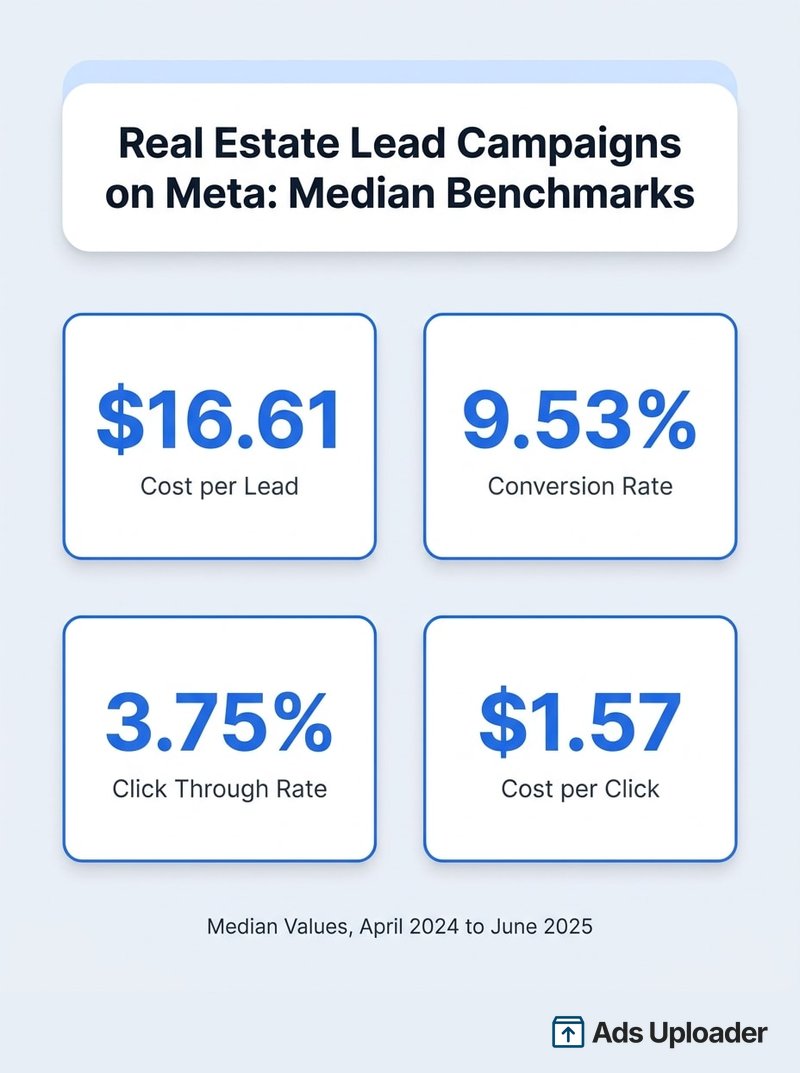
| Lead campaign CTR | 3.75% | Apr 2024 to Jun 2025, WordStream/LocaliQ |
| Lead campaign CPC | $1.57 | Apr 2024 to Jun 2025, WordStream/LocaliQ |
| Lead conversion rate | 9.53% | Apr 2024 to Jun 2025, WordStream/LocaliQ |
| Cost per lead | $16.61 | Apr 2024 to Jun 2025, WordStream/LocaliQ |
| Traffic campaign CTR | 1.68% | Apr 2024 to Jun 2025, WordStream/LocaliQ |
| Traffic campaign CPC | $0.91 | Apr 2024 to Jun 2025, WordStream/LocaliQ |
These come from WordStream and LocaliQ's 2025 Facebook benchmarks, and they deserve a caveat the source itself supplies: the reported averages are medians, and the methodology requires only two campaigns per lead vertical. Treat them as directional baselines, not market rates. For context, the same publisher reported $13.87 for real estate CPL in its 2024 report, but sample and campaign mix change between years, so that is not a clean price trend.
The more useful number is further down the funnel, and it is where most reporting stops too early. Published lead-to-close rates for online real estate leads span roughly 0.5% to 3%, and the spread is mostly definitional: some sources measure form fill to closed business, others form fill to opportunity. At a $16.61 lead and a 1% close rate, a client costs about $1,661 in media. That is the number to hold against commission, not CPL.
Which is also why ROAS is a poor fit here. No credible transparent real estate Meta ROAS benchmark exists publicly, and any that circulate come from vendor cases with advertiser-specific attribution. A commission business with a months-long close cycle is better measured on a chain: spend, raw lead, contacted lead, qualified lead, appointment, signed client, closing, and gross commission income. Feeding those CRM outcomes back to Meta is not just reporting hygiene, either. Meta reports 15% lower cost per quality lead and a 44% higher lead-to-quality-lead rate when advertisers return CRM signals through conversion leads optimization compared with ordinary lead optimization.
On budget, there is no authoritative national survey of Meta-only agent spend. A 2026 survey of 569 US and Canadian agents found 75% planned to spend under $10,000 a year on all marketing and lead generation, with 40% at $2,500 or less, which puts realistic Meta budgets in perspective. Practitioner guidance commonly suggests $25 to $50 a day for 7 to 10 days on a single listing campaign. Label that as planning guidance, not a benchmark. Meta's own advice is to run longer than six days so delivery has time to learn.
One statistic to stop repeating: the claim that 76% or 87% of agents run Facebook ads. NAR's 2026 Member Profile found 76% of REALTORS used Facebook professionally, which includes organic posting, groups, and messaging. The same report found the typical REALTOR attributed just 3% of business to social media. No reliable figure for paid Meta adoption among agents exists publicly.
Getting Many Listings Live Without Rebuilding Every Ad
Running real estate ads for Facebook at scale is a different job. A solo agent with two listings has a creative problem. A team with 30 active listings has an operations problem, and it is the one that quietly caps most brokerages' ad output.
Three approaches, depending on scale:
A few short-lived listings. Build one reusable template per format and duplicate it, swapping the listing-specific facts. No catalog overhead, and you keep full control of copy. This is right for most individual agents and small teams.
Dozens or hundreds of changing listings with a reliable MLS or IDX feed. This is what the Home Listings catalog exists for. Adds, price changes, and status changes flow through automatically, product sets control which listings are eligible, and matched website events enable listing-level retargeting. The setup cost is real, and it only pays off if the feed is accurate.
Several markets or developments with different economics. Split by genuine market and offer rather than creating one ad set per property. Fragmenting budget across many underfunded ad sets is one of the most common reasons real estate accounts underperform, and Meta's own consolidation guidance points the same way.
Whichever route, the constraint at volume is usually launch mechanics rather than strategy: uploading the same structure dozens of times with different assets. That is a solved problem if you approach it systematically.
Naming discipline matters more here than anywhere else, because reporting at 30 listings is unreadable without it. A convention like [market]_[offer]_[objective]_[listing-id]_[YYYYMM] keeps catalog IDs traceable back to inventory and lets you break performance down by market, offer, and creative concept rather than squinting at 40 similar campaign names.
Real Estate Facebook Ads Running in 2026
Everything below is a real ad pulled from the Meta Ad Library on 9 September 2026, still running when captured, and each carries its Library ID so you can open it and confirm it. The mix is deliberate: single-listing and new-development ads, the seller-side valuation ads that generate the most leads, a buyer tour ad from a national brokerage, and a direct-to-camera agent brand ad. One thing you will not find here is an open-house or a just-sold ad, because those are short-lived local creatives that rarely stay live long enough to cite. As everywhere in this guide, the library shows the creative and the copy, never the spend or the leads, so read these as construction, not results. Every one of them runs under the Housing Special Ad Category, so watch how each does its qualifying through the offer rather than the audience.
A single-development listing ad that leads with the numbers a serious buyer needs: a real price band, unit specifics, and a low-commitment action. The offer is early access to a named community, and the "Now Selling from the Upper $500s" line plus the 2-bedroom, up-to-2.5-bath detail lets the wrong buyers scroll past. Copy the structure of putting the price and the concrete specs in the creative itself, since that self-selection is exactly the filtering the Housing category takes away from targeting.


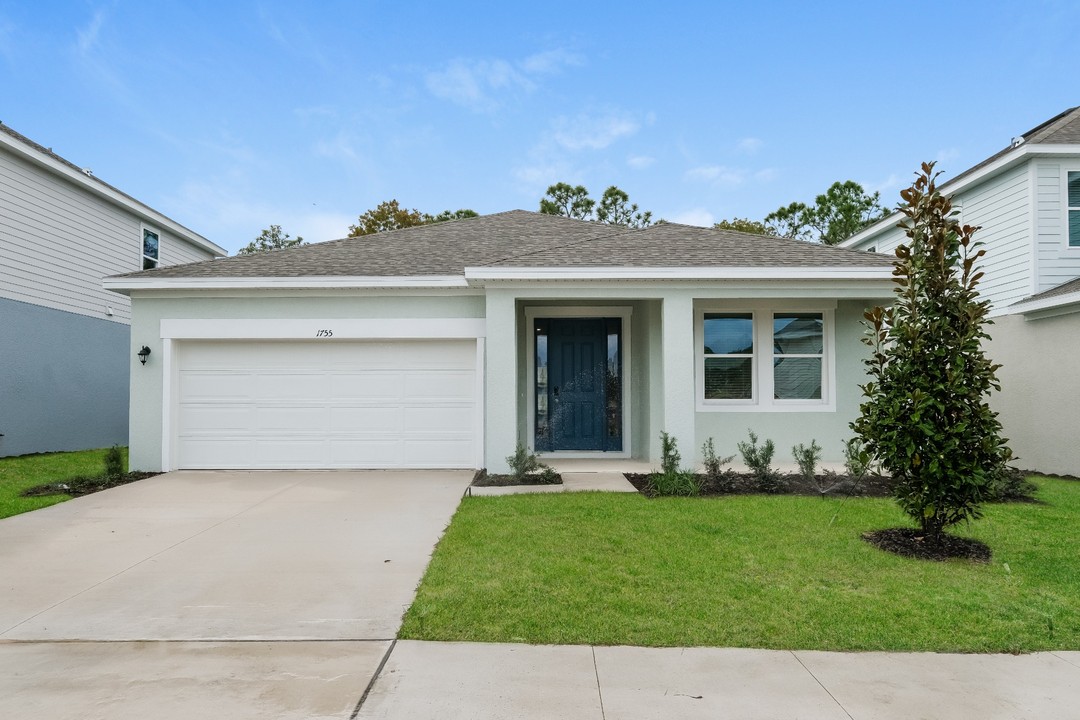
A new-construction single-listing ad that does the same job in one line: beds, baths, and a starting price. The offer is a floorplan tour with a direct "Call now" action, and pricing "starting at $299,999.*" is the qualifier. Note the asterisk on that figure, which is the honest way to run a starting-at price, and note that because housing ads cannot narrow by income, the price in the creative is the income filter.

A homes-for-sale video from a modular builder, and a clean example of a problem-first hook. The offer is affordable modular homes with factory-direct pricing, opened by the "Tired of renting?" line before the promise arrives. The thing to copy is that short pain-point cold open, which earns the next three seconds of a scroll. Its nationwide delivery also fits the Housing category rather than fighting it: when your product genuinely serves a wide area, the 15-mile minimum radius stops being a constraint.

A buyer-side tour ad from a national brokerage that personalizes a scaled campaign. The offer is a same-day showing, and the copy names the specific agent, Eric Ciotola, then adds a real deadline with "before the home you love is gone." Copy the move of attaching a named human and a genuine urgency device to what is otherwise a template. The broad, single-creative approach is itself a tell of the Housing category: a portal at this scale cannot run tight farm-area targeting, so one buyer message covers a wide radius.

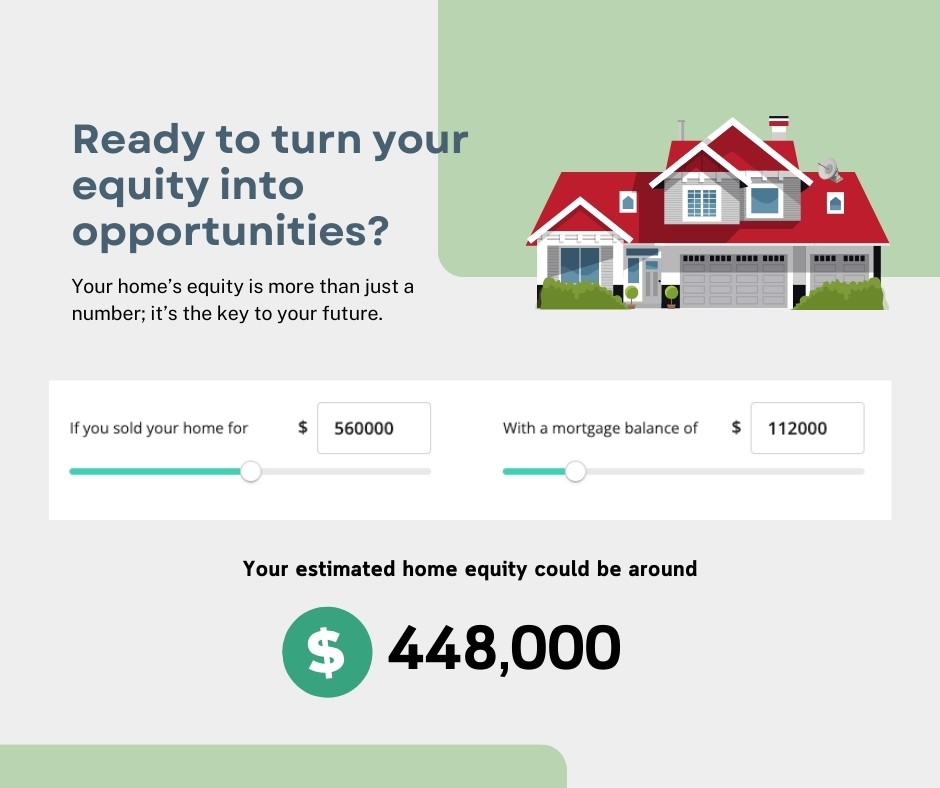
The seller-side workhorse, and a textbook home-valuation lead ad from an individual agent. The offer is a free, no-obligation Home Value Report, and the copy names exactly what the seller receives: current market value, equity, refinance options, and mortgage reduction insights. That specificity is the thing to copy, because a defined deliverable raises lead quality far more than a vague "find out what your home is worth." This is also a clean compliance model: it describes the transaction and the report, never the person who should sell.

The same valuation offer run at national scale as a video. Orchard uses a free home valuation as the entry point to its buy-before-you-sell program, and the video earns attention by opening on the outcome, a homeowner who moved before their old place hit the market, then revealing the mechanism. The takeaway is the story structure: result first, method second, offer last. The valuation stays the low-commitment first step, exactly the play the individual agent above runs.

An agent brand ad, direct to camera, with no listing attached. Rather than sell a property, the agent leads with a useful tactic on buying down interest rates and offers a free buyer consult, plus a home valuation link for sellers. That is the point of a brand ad: it teaches first so the referral lands months later, and it will not show results on a one-week read. Note it runs to an Instagram profile and, like every ad here, does its qualifying in the message because the Housing category leaves little to do in the audience.

What to Do With This
Real estate ads for Facebook reward a different kind of preparation than they did five years ago. The dials moved from the ad set to the ad.
- Declare Housing first, then plan. Building a strategy around age, income, or ZIP targeting wastes a planning cycle on controls you cannot use.
- Let the offer qualify. Price, property type, neighbourhood, and a defined deliverable do the filtering that demographics used to.
- Pick the format from the offer. 4:5 image for a listing, carousel for a walkthrough, 9:16 for a tour, Instant Form for a valuation.
- Measure past the lead. A $16.61 CPL means nothing until you know your contact, qualification, and close rates.
- Describe the property, not the buyer. It is both the legal standard and, as it happens, better copy.
Start with one offer and three genuinely different creative concepts, run a real service radius, and give it long enough to leave the learning phase. Read qualified cost per lead before you touch anything. Everything useful you will learn about your market is downstream of that first honest test.