Church Facebook ads are invitation and lead-generation ads that churches, denominations and church-growth agencies run on Meta to reach nearby people who do not currently attend. Most pair a service-invite or plan-your-visit hook with a landing page or an instant form, then capture the response and follow up. Live examples in the Meta Ad Library resolve into six repeating offers: weekend invitations, plan-your-visit funnels, online services, find-a-church ads, denominational lead generation, and agencies selling ad systems to pastors. The offer, not the creative, decides who actually shows up.
Every ad below is a real ad, pulled live from the Meta Ad Library in September 2026 and rendered here from its genuine creative and verbatim copy. Each card carries the advertiser name and the archive ID, so you can open the ad and check it yourself. Churches are quietly one of the busiest local advertiser types on Meta, and the library shows the whole spread, from a one-sentence invite by a church with 2,000 followers to a swarm of near-identical lead-gen ads run across dozens of pages at once.
They are grouped by the offer they make rather than by creative format, because the offer is the thing that varies and the thing you have to choose. After the teardowns there are two sections worth more than the examples: whether you can still target Christians at all, and why so many church ads underdeliver.
How These Church Facebook Ads Examples Were Pulled
Each ad below is one entry from our wider library of Facebook ad examples.
Everything here came from the Meta Ad Library, filtered to the United States and mostly to active ads, retrieved on 8 September 2026. I searched church invitation and church-marketing terms, then went advertiser by advertiser to see the full set of variants each one was running.
One limitation matters more than any other. For ordinary (non-political) ads, the Ad Library shows creative, copy, CTA, start date and platforms. It does not show spend, impressions, cost per lead, or how many people actually walked in. So nobody can honestly attach a cost per guest to a specific competitor ad, and this article does not. What follows is a teardown of creative and offer construction. Presence in the library proves an ad was live when I checked, nothing more.
Each ad below is shown in a card that carries the real page name, the verbatim primary text, the real headline and the real CTA button, above a footer that links straight back to the ad in the Ad Library. Where an ad ran a native instant form, the library also exposes the form questions, which is often where the most useful material sits.
The Six Offers Church Ads Actually Make
Across the pull, nearly every church ad resolves to one of six offers. The creative varies wildly. The proposition does not.
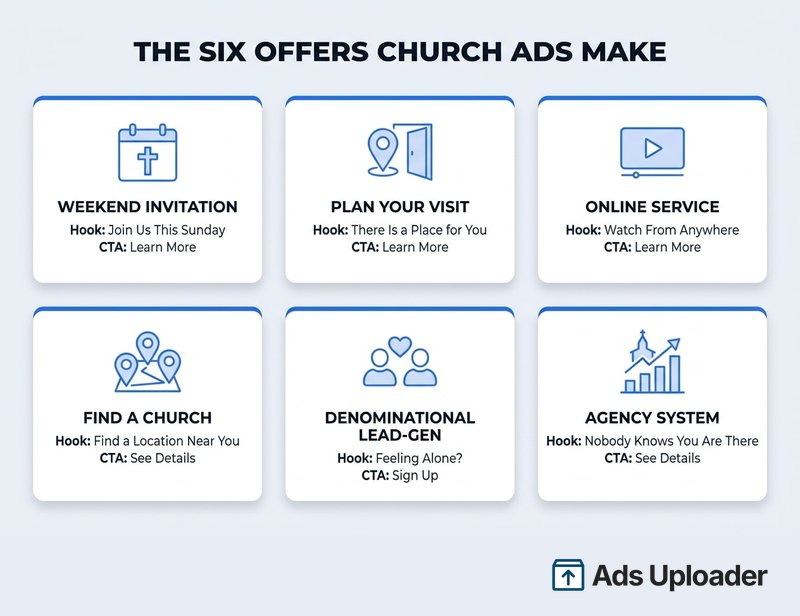
| Offer | Typical hook | Typical CTA | Where it sends people |
|---|---|---|---|
| Weekend invitation | Join us this Sunday | Learn more | Plan-a-visit page |
| Plan your visit | There is a place for you | Learn more | Dedicated first-visit page |
| Online service | Watch from anywhere | Learn more | Livestream reminder |
| Find a church | Find a location near you | See details | Campus or parish finder |
| Denominational lead-gen | Feeling alone? | Sign up | Native form, human follow-up |
| Agency selling to churches | Nobody knows you are there | See details | Discovery call |
The useful thing about this frame is that it tells you what each offer demands downstream. A weekend invite and a plan-your-visit ad can look identical in the feed and produce completely different first-Sunday numbers, because one sends people to a homepage and the other sends them to a page built to get them through the door. Events, which we treat as their own short section below, are simply the weekend invitation with a date and a reason to act now.
Weekend-Service Invitations
The default church offer, and the one most guides recommend. It works because a personal invitation is the strongest lever churches have: Lifeway Research's 2016 survey of 2,000 unchurched Americans found an invite from a friend or family member rated 51 to 55% effective, against just 18% for a Facebook ad. The read on that is not that ads fail. It is that the ad should amplify the invitation, not replace it.
Cultivate Church: Naming the County, Asking a Question
The copy opens like a text message: "Hey, Shelby County, quick question. When was the last time you actually enjoyed going to church?" Then it lowers the stakes: "real people, meaningful messages, and a place where you can show up exactly as you are," plus "amazing kids worship experience, so bring the whole family," closing on "No pressure. No expectations" and "Click 'Learn More' to plan your visit. We will save you a seat." Headline: "Join Us This Sunday." The link description carries the times: "Sundays at 9 AM, 10:15 AM & 11:30 AM."

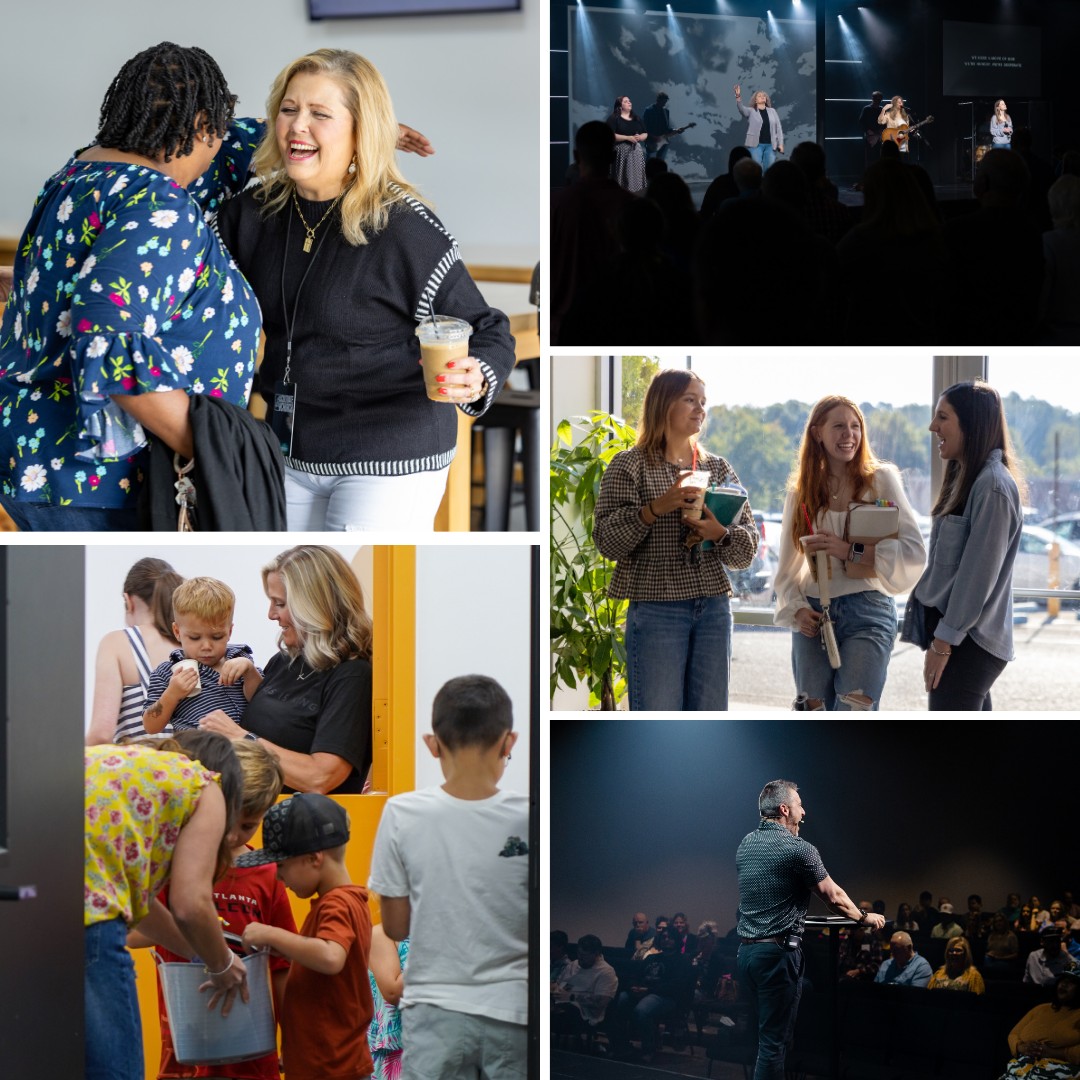
What to take from it. Naming the county is the sharpest personalization a church has left now that religion targeting is gone, and it costs nothing. The interesting part is that this is a template. The same "Hey, [City], quick question" opening runs geo-swapped across other church pages in the library, which is not a creative problem but a launch pattern, and it is the single most common structural feature of church accounts run by an agency.
Trinity Church: One Sentence, Two Service Times
It has run since November 2025, which in this vertical makes it evergreen. The entire primary text is one sentence: "You don't have to do life alone-join us every Sunday at 9:00am or 10:30am as Trinity Church worships together!" That is it. No numbered list, no emoji stack, no manufactured urgency, and the link description quietly adds a warm "welcoming community of imperfect people" line under the headline.

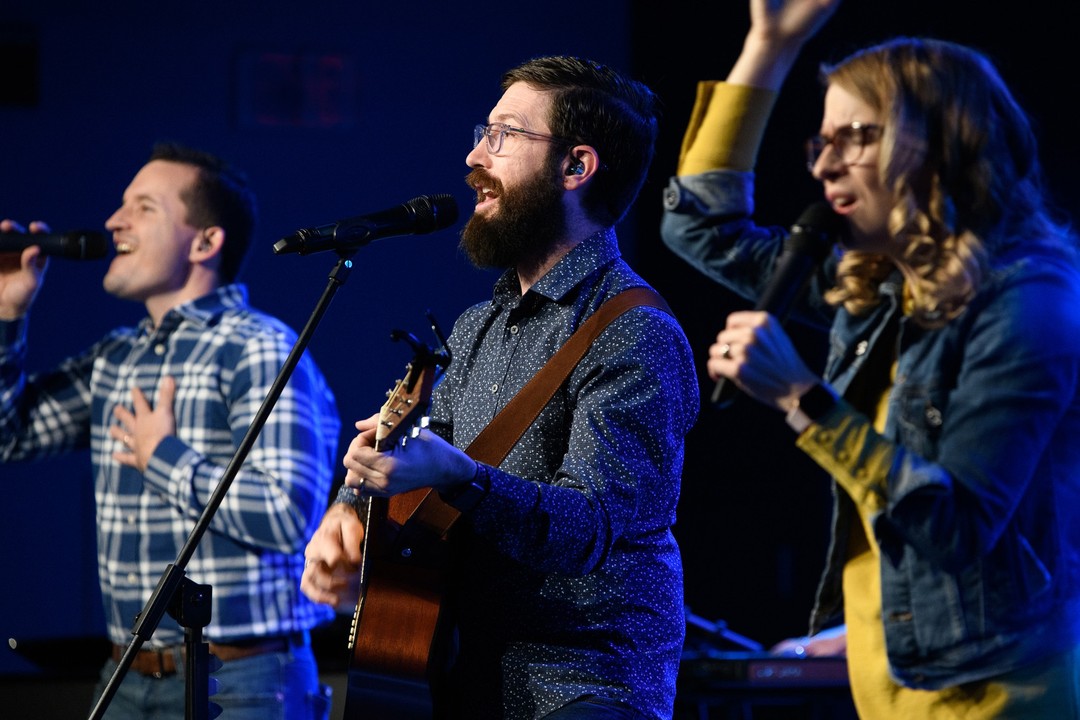
What to take from it. This is the minimalist end of the range, run by a church with about 2,000 followers, and it works because it does the two things a cold weekend invite has to do: it names an emotional reason to come (not doing life alone) and it puts the service times in the copy so nobody has to click to find them. A small local church with one clear sentence beats a boosted photo of an empty sanctuary.
Event and Seasonal Ads
The same invitation offer with a date attached. An event ad borrows something a normal Sunday invite lacks, a hard deadline and often a bigger draw, so it gives a non-attender a specific reason to act this week rather than someday. Easter and Christmas are the obvious ones, but the library is full of anniversaries, concerts, block parties and fall festivals doing the same job all year.
Christ Methodist Church of Auburn: A Concert as the Front Door
Christ Methodist Church of Auburn is not selling a service here, it is sponsoring "An Evening with CeCe Winans" at the Ham Amphitheatre on September 10 at 7 PM, with tickets handled by a third-party box office. The copy is pure event: "an unforgettable night of worship, encouragement, and incredible music," then "Bring your family, invite your friends."

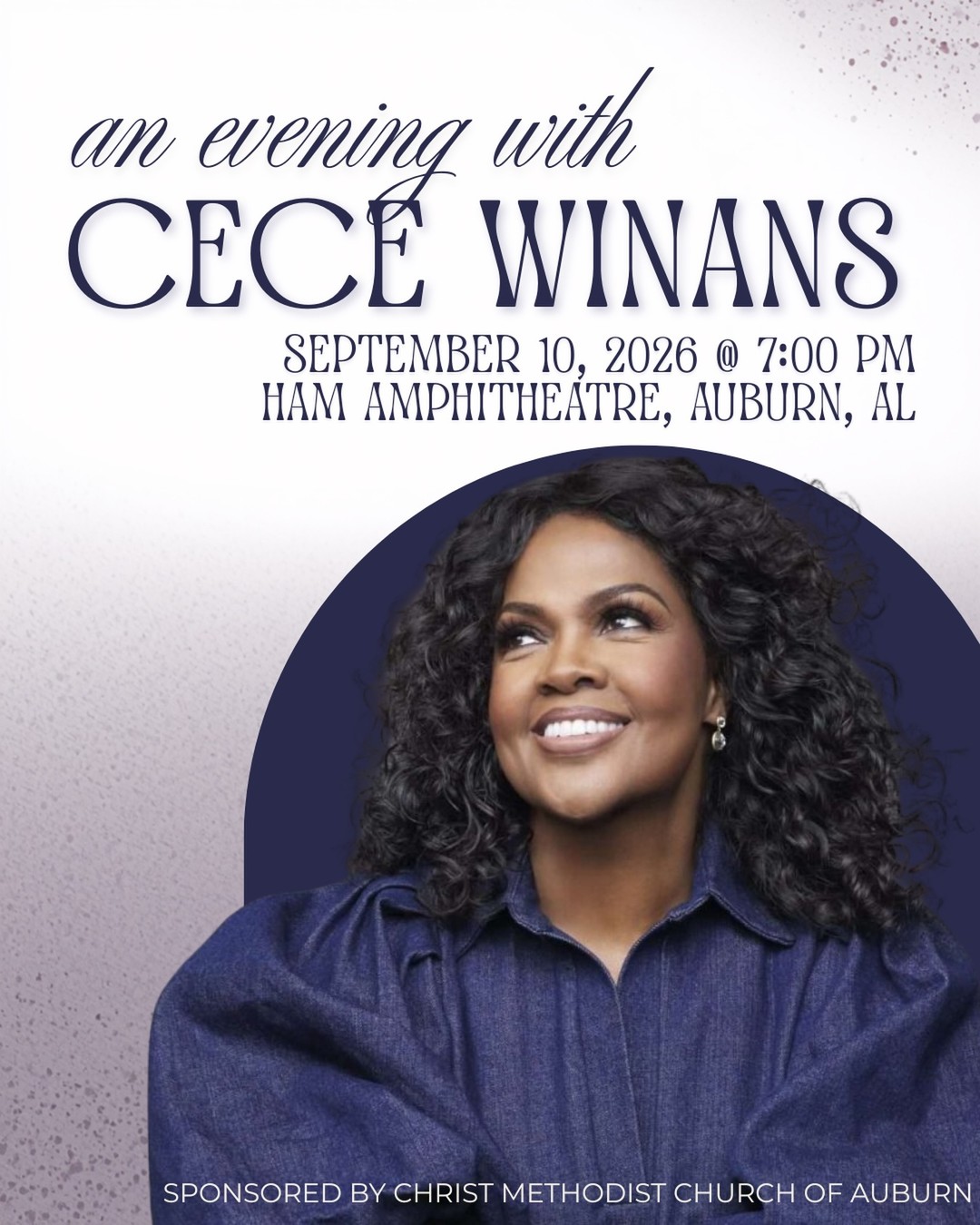
What to take from it. A named draw and a fixed date do the persuasion a generic invite cannot, and a community concert is a far lower-commitment first step than a Sunday service for someone who has never been. The church's name rides along on the whole thing. The trade is that ticketing lives off-platform, so the church has to work harder to turn an attendee into a known contact it can invite back.
Trace Church: An Anniversary Party, Told to Camera
Trace Church is celebrating ten years with "a huge anniversary party with food trucks, live music, games, and more" on Sunday, September 13, and lead pastor Aaron Pennington delivers the invite straight to camera in the video: "on September 13th, we're actually celebrating our 10 year anniversary."

What to take from it. "Food trucks, live music, games" is the whole point: it frames the first visit as a party, not a sermon, which is the lowest-friction on-ramp a church can offer. The pastor filming the invite himself does what a designed graphic cannot, it puts a face to the church before anyone shows up. This is the one video format worth copying for a milestone, because a real person inviting you outperforms a motion-graphic countdown.
The Plan-Your-Visit Funnel
The offer that separates a real campaign from a boosted post. Instead of sending clicks to a homepage, a plan-your-visit ad speaks to a nervous first-timer and sends them somewhere built to get them through the door: pick a service, see the parking, find out where the kids go. Pew's 2016 research on people searching for a new congregation found the top decision factors were sermon quality (83%), the welcome from leaders (79%) and service style (74%), which is exactly the uncertainty a good first-visit ad removes.
River Church Lake Charles: Written for Three Kinds of Visitor
The hook is "Let God Arise in 2026!" and the body is built to welcome three kinds of newcomer explicitly: "whether you're discovering Jesus for the first time, returning to Him after time away, or ready to prioritize your walk." Then three next steps, "Connect to Jesus, Grow in Jesus, Lead for Jesus," and a plain "Join us this Sunday!" Headline: "See you Sunday!" Link description: "8:30am | 10am | 11:30am." CTA: See details.

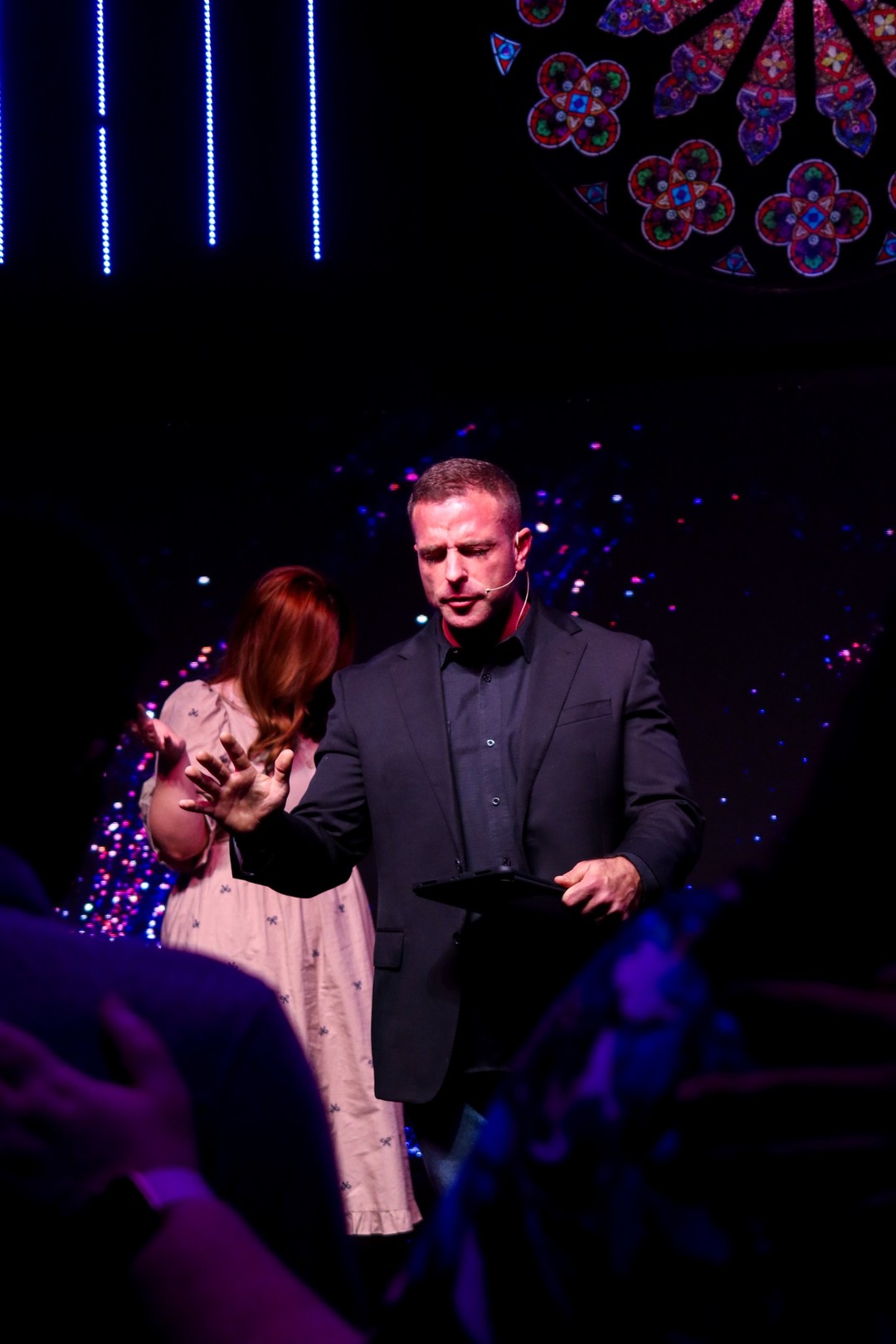
What to take from it. Naming the three visitor types is a small move that does a lot: a first-timer, a returner and a committed member all see themselves in the first two lines, which is exactly the uncertainty Pew found newcomers carry. The times sit in the copy, so nobody has to click to find them, and the "next steps" ladder tells a stranger the church has thought past Sunday morning.
The Life Church: Selling the First Sunday, Not the Sermon
The hook targets a life moment, not a belief: "New job, new apartment, new routine, it's a lot to figure out on your own. Church doesn't have to be one more thing on the list." Then the reassurance, "a place where you're known by name, not just a face in the crowd," and the close, "Click 'Learn More' and plan your visit for a smooth first Sunday." Headline: "Worship With Us This Sunday." Times in the link description: "Sundays at 9 or 11 AM."


What to take from it. This is a textbook plan-your-visit ad because it sells the visit, not the theology. The promise is a smooth first Sunday, which is the actual thing a newcomer is anxious about. Note the phrasing discipline too: it never asserts the reader's religion, it names a circumstance, a move, that anyone can have. That is the safe side of Meta's personal attributes line, which we come back to below.
Build Your Own Swipe File
Stop scrolling the Ad Library by hand. Search, filter, and save proven ads with a free Chrome extension built for media buyers.
Get Ad Library Helper FreeFree Chrome extension • Built by Ads Uploader
Online and Watch-From-Home Offers
The offer that grew up during the streaming years and never went away. Pew's 2023 to 2024 research found roughly a quarter of US adults watch religious services online or on TV at least monthly, so online is a real audience, not a consolation prize. The catch is that online reach is not in-person intent, so the smart version of this offer treats a viewer as the top of a funnel, not the finish line.
Freedom Church: No Church Experience Required
The copy removes every barrier at once: "You can join us on YouTube from your couch, your kitchen, work, or anywhere life takes you," then a checklist ending "Watch from anywhere" and the key line, "No church experience required." It closes, "Never really been a 'church person'? Sunday is the perfect place to start," and the copy pushes people to set a reminder, though the button itself reads Learn more.

What to take from it. The strength here is not the video, it is the barrier removal. "No church experience required" and "just one hour" name the two objections a never-attended viewer actually has, and the "Set A Reminder" push treats the livestream as an appointment rather than a hope. A boosted sermon clip captures none of that, because it asks for an hour without first making the hour feel safe.
Find-a-Church and Find-a-Location Ads
A distinct offer for multi-site churches and denominations, and almost always a carousel or a search-styled creative. When you have more than one location, the job of the ad is not to sell a service, it is to answer "is there one of you near me," and a finder plus a clean map does that better than a sermon clip.
Church of the Highlands: Belonging, Then a Finder
This runs from one of the largest churches in the US. The featured card leads with warmth, a smiling greeter at the door and the line "This is what it looks like to have a place to call home," while the headline carries the actual offer, "Find a location near you!" CTA: See details, to the campuses page.

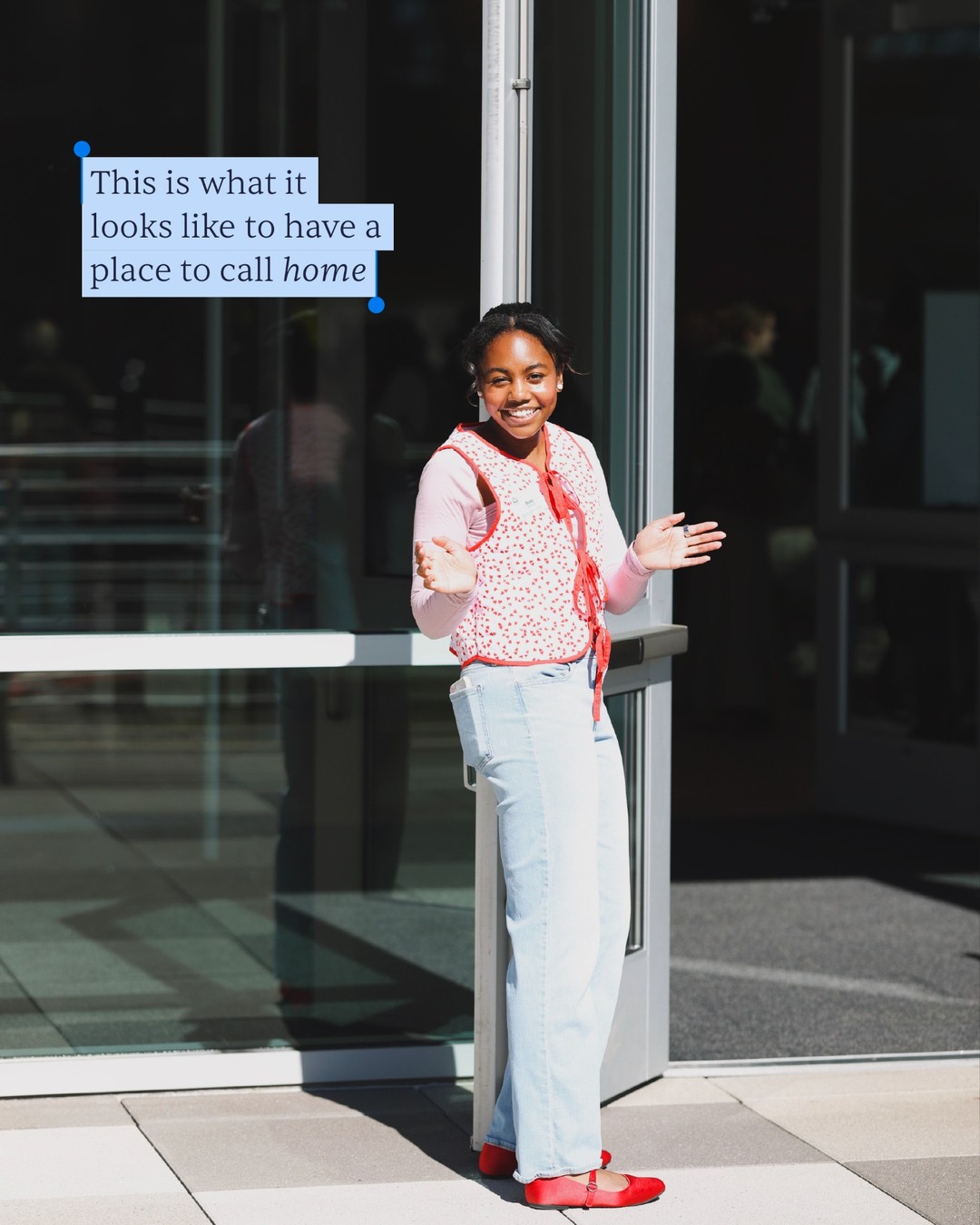
What to take from it. The creative sells belonging and the headline sells logistics, which is the right division of labor for a multi-site brand: the image answers "would I fit here," the CTA answers "is there one near me." A big church can afford to lead with feeling because the finder does the practical work one tap later.
Archdiocese of Seattle: The Creative Is the Finder
This one carries almost no primary text at all. The work is done inside the image, a warm shot of a crucifix with a search-bar graphic reading "Find a Catholic parish near you" over the URL archseattle.org/finder. CTA: Learn more.

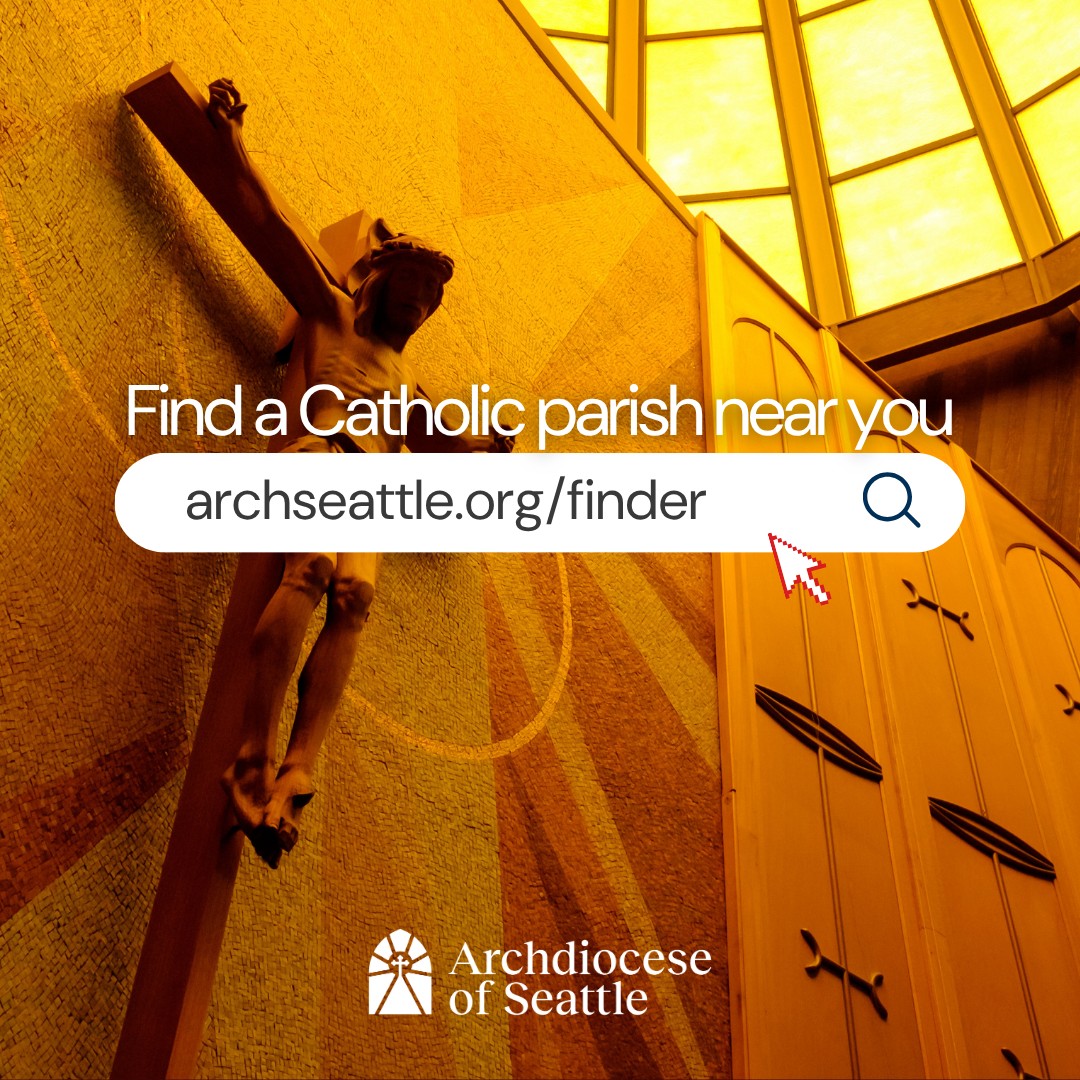
What to take from it. Baking the search bar and the finder URL into the image is a smart move for a diocese: the offer survives even when the primary text is stripped away on a placement, and the graphic mimics the exact thing the searcher would otherwise type into Google. When your only job is to route people to the nearest parish, the creative can be the interface.
The Denominational Lead-Gen Machine
The most industrialized church advertising in the library, and a genuine outlier. A swarm of pages affiliated with The Church of Jesus Christ of Latter-day Saints runs near-identical instant-form ads built on a single emotion: loneliness.
Forward With Christ: Loneliness In, a Sign-Up Out
The creative is a simple line drawing of a lonely figure in a crowd with the caption "do you feel alone?" and a bottom bar reading "come to church with us." The copy matches it exactly: "Do you feel alone? You don't have to! Come to church with us and feel noticed and loved. Make new friends and feel their support. Click below to find a church from the Church of Jesus Christ of Latter-day Saints near you!" Headline: "Feeling alone?" CTA: Sign up.

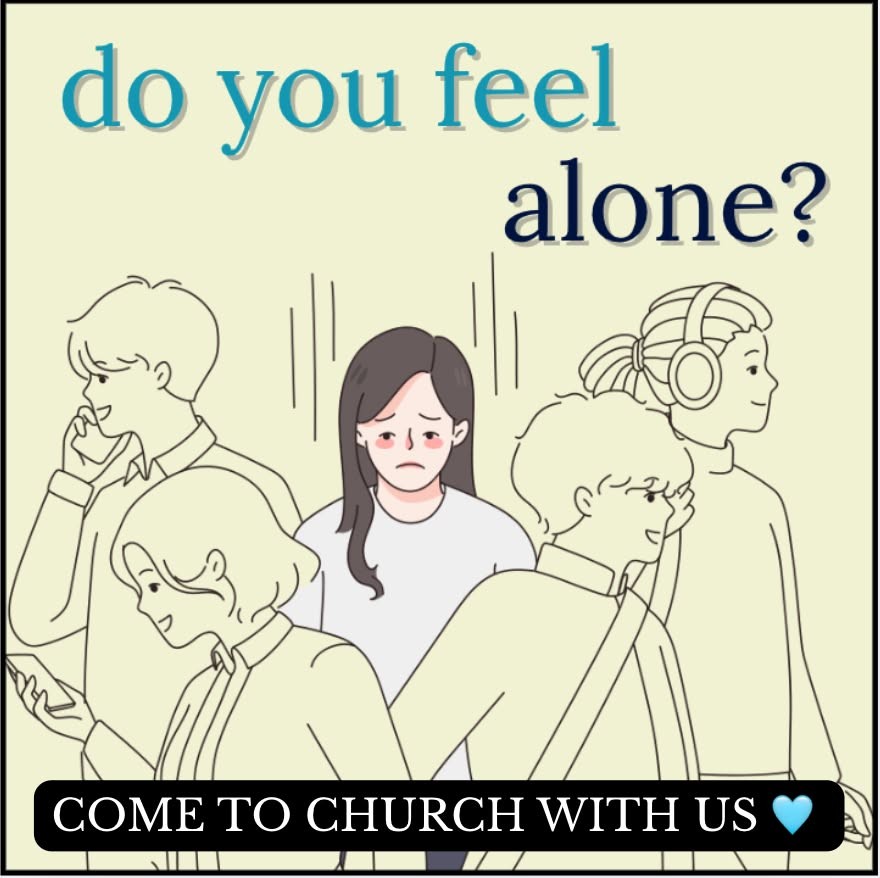
What to take from it. The Sign up button opens a native Meta instant form, and the form is the strategy: it captures contact details so a real person can follow up quickly, which is the part most church ads skip. The same "Do you feel alone?" creative and copy runs word for word across sibling pages such as Found in Christ and Find Christ, so this is one concept launched across many accounts at once. Whatever you make of the theology, the funnel design, a broad emotional hook, a native form and fast human follow-up, is textbook, and scale is the story.
The Agencies Advertising to Churches
The pull's biggest surprise is a whole second market: agencies and coaches advertising church-growth ad systems to pastors. Once you see it, you cannot unsee it.
The Effective Church Group: A Free Checklist as the Hook
The hook is a pattern interrupt aimed straight at a pastor: "Hey Pastor! Stop Inviting People to Church. Do This Instead and Watch Guests Show Up." Then a case story (a rural church that "doubled" in three months), and the offer: a free "Pastor's Get More Visitors Checklist" promising "3 Proven Strategies," "3 Practical Toolkits" and "3 How-To Guides." The creative is a 3D book cover render stamped "Free For Pastors." CTA: See details.

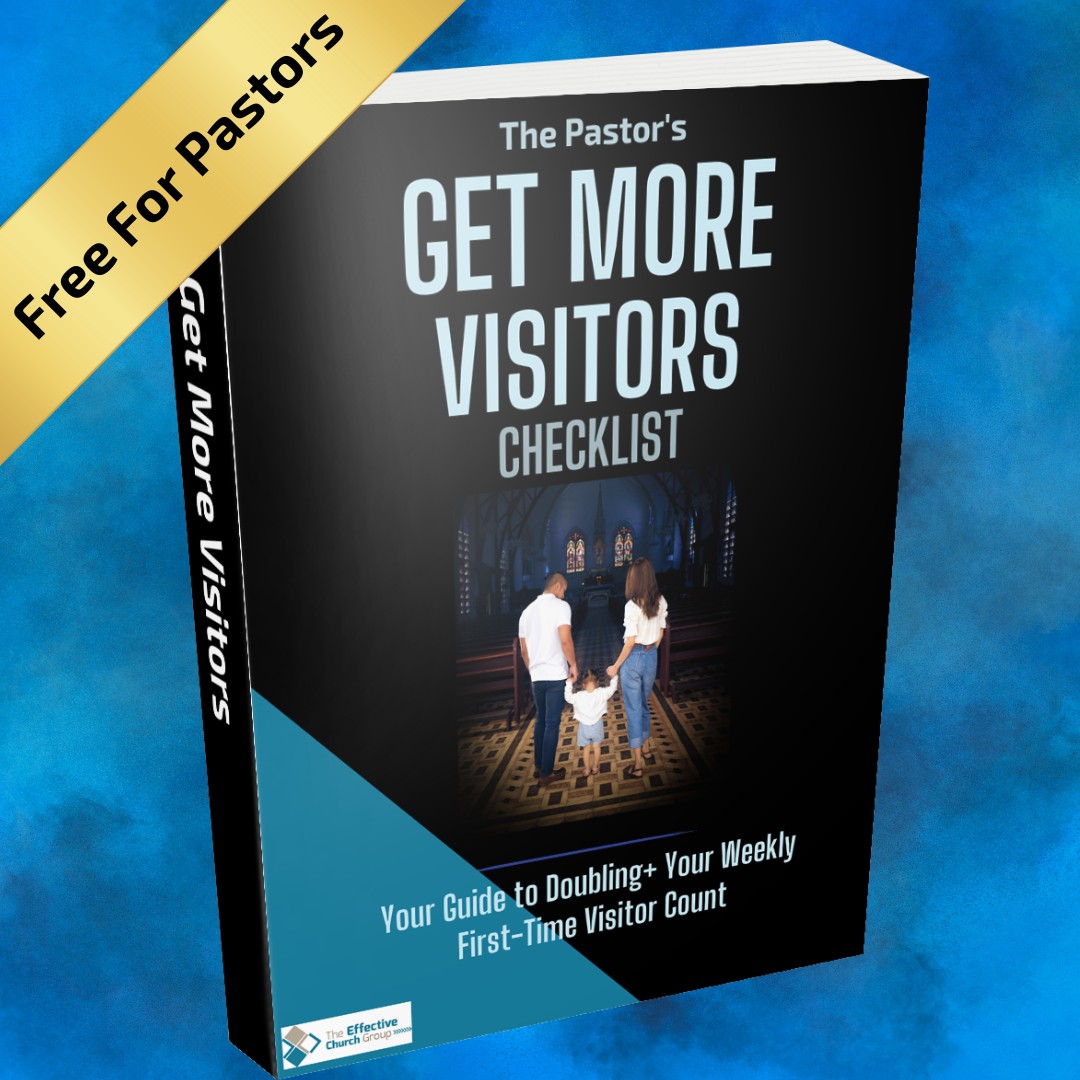
What to take from it. The free checklist is a lead magnet: the free thing gets the pastor's contact details, and the discovery call and the retainer follow. The "stop inviting people to church" hook is deliberately provocative because it stops a pastor mid-scroll. It is a clean example of how the whole category sells, education first, services second, and it is the mirror image of the church ads above, aimed at the people who run them.
Blueprint: Free Website, Free Grant, Application Required
Blueprint leads with a search-behavior fact: "New families search 'churches near me' every day. Will they find you?" Then the offer: "We build churches free websites and set up the Google Ad Grant, $10K/month in free ads, so your church shows up first. Learn more by applying!" Headline: "Free Website for Your Church." CTA: Get offer.

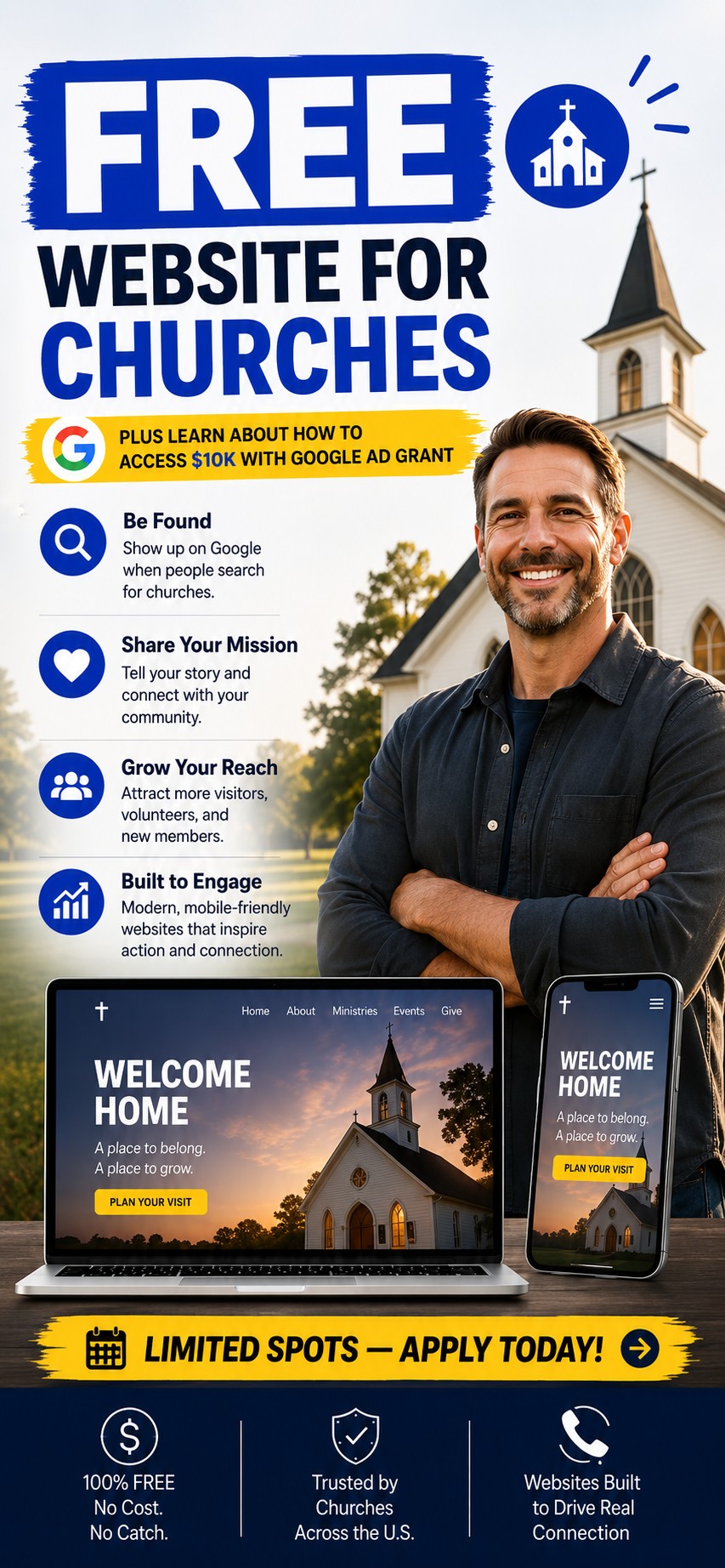
What to take from it. The free-website-plus-grant offer is the same lead-magnet move as the checklist, one rung further in: the free build gets the church in the door, the managed ad spend and the retainer follow. The $10,000 a month is the Google Ad Grant, real free search inventory that eligible nonprofits can apply for, bundled in as the hook. That is not a criticism, it is how the category works. Before you buy any "guaranteed guests" package, pin down the definitions: is a guest a form fill, a check-in, or a returning household, and does any guarantee refund the management fee, the ad spend, or nothing.
Can You Still Target Christians on Facebook?
This is the question the older church-marketing guides get wrong, and it is worth stating the fact plainly.
You cannot target religion as an interest anymore. Meta announced on 9 November 2021 that it would remove sensitive detailed-targeting options, and the change took effect on 19 January 2022. The company said it was removing "Detailed Targeting options that relate to topics people may perceive as sensitive," and it named religious practices and groups specifically, with examples like "Catholic Church" and "Jewish holidays." You can read the original Meta announcement. So any tutorial telling a church to pick Christianity, a denomination or Bible study as an interest is out of date.
What a church still has is often better anyway: location and radius targeting, age controls, broad or Advantage+ delivery, custom audiences from website visitors and video or page engagement, lookalikes, and consented customer lists. The sharpest of these is retargeting: show a plan-your-visit ad to people who watched a sermon clip or visited the first-visit page. One caution on customer lists: a church membership list can reveal religious affiliation, so upload it only with the necessary rights and consent, and keep sensitive answers ("questioning faith," pastoral notes) out of your Conversions API and CRM audiences.
Watch the copy, not just the targeting. Meta's advertising standards state that "Ads must not contain content that asserts or implies personal attributes", and religion is one of the covered attributes. The line is not whether you use a religious word (a church can advertise a religious service), it is whether the copy implies you know the viewer's faith or spiritual state. "As a Christian, you need a stronger community" is the risky version; "Looking for community? Join us this Sunday" is the safe one. "Struggling in your faith?" is risky; "A welcoming place to explore faith and ask questions" is fine. Every strong example above talks about the church, never about the reader's beliefs.
One more myth to kill: religion is not a Special Ad Category. Those categories are Housing, Employment, Financial Products and Services, and Social Issues, Elections or Politics. A Sunday-service invite is none of them. But a church ad can still land in one because of its content: a staff vacancy is an employment ad, a lending program is financial, and a voter guide or ballot-advocacy message is a social-issue ad that needs authorization and a "Paid for by" disclaimer.
Save Hours on Creative Testing
Stop uploading ads one by one. Bulk process unlimited creatives with automatic media matching and direct API publishing.
Try Ads Uploader FreeNo credit card required • 7-day free trial
Why Church Facebook Ads Underdeliver
Church ads have their own version of the junk-lead problem, and like any other lead vertical, it starts in the ad and the setup, not the audience.
The most common failure is boosting a post instead of running a campaign, then counting reactions and video views as growth. Reach is not attendance. The second is the destination: sending every click to a generic homepage instead of a plan-your-visit page, so a nervous first-timer lands on a wall of ministry menus and bounces. The third is what happens after a form. Instant forms prefill name, email and phone, so a distracted tap becomes a lead, and if nobody confirms or follows up quickly, that lead is worthless.
What the good examples do is fix it in three places:
- Qualify in the creative. Name the town and the service times in the ad, like Cultivate and Trinity, so people who cannot or will not travel self-select out before they cost you anything.
- Send them somewhere built to receive them. River Church's newcomer-first copy and Freedom Church's reminder ladder both do the job a homepage cannot.
- Follow up like a human, fast. The denominational lead-gen ads win here despite thin creative, because a real person makes contact quickly. Feeding a neutral qualified outcome (an attended visit) back through the Conversions API lets delivery optimize toward visitors instead of the cheapest form fill.
The honest measurement caveat runs through all of it. A form submission, a Facebook event response, a landing-page view and a verified first visit are four different things, and no church benchmark reliably connects them. So do not buy a "cost per guest" number, from an agency or a blog, without asking exactly which of those four it counts.
Building a Church Ad Set You Can Actually Run
The structural lesson from this pull is the same as every local vertical: duplication. The "Hey, [City]" template runs across multiple churches with the town swapped. The denominational pages run one creative across dozens of accounts. Once you commit to naming the town and the service times, and you should, a single concept becomes a dozen geo-specific ads.
That has two consequences. First, you need a launch process that can produce those variants without hand-building each one, or you will quietly stop testing new hooks because shipping them is too much work. A consistent naming convention that encodes offer, town and hook is what makes the set readable three weeks later, when "Ad 4 copy 2" tells you nothing about whether the plan-your-visit angle beat the event angle. Second, when you run seasonal pushes anchored on Easter, Christmas and one-off events like the ones above, you are relaunching the same geo matrix on a deadline, which is exactly where a bulk launch process earns its keep.
Plan on a couple of hooks per offer, each with the town and times named, pointed at one plan-your-visit page, and judge them on qualified visits rather than cheap clicks.
Wrapping Up
Twelve live ads, six offers plus their seasonal event variants, and a fairly consistent picture:
- Amplify the invitation, do not replace it. The unchurched rate a friend's invite far above an ad, so the ad's job is to give members something worth sending and newcomers a low-risk first step.
- Name the town and the times. It is the cheapest personalization left after religion targeting went away, and the small churches do it better than the big brands.
- Send clicks to a plan-your-visit page, not a homepage. River Church and The Life win on the newcomer-first copy, not the graphics.
- Watch the copy. Talk about the church, never about the reader's beliefs, or you trip Meta's personal attributes rule.
- Interrogate any "guaranteed guests" pitch. There is a whole agency market selling church-growth ad systems, and the number that matters is verified visits, not form fills.
The churches doing well here are not the ones with a secret audience. They are the ones whose ad says something specific enough to be checked, and whose next step is built to actually receive a visitor.
Frequently Asked Questions
Do Facebook Ads Work for Churches?
They reliably produce awareness, event responses and plan-your-visit leads, but raw lead volume is a weak measure of success. There is no representative public dataset for church cost per attended visit on Meta in 2026, and most church numbers are self-reported agency case studies. The evidence is that ads amplify personal invitations, which the unchurched rate far higher than advertising, so judge campaigns on verified first-time households and return visits.
Can You Target People by Religion on Facebook in 2026?
Not through detailed-targeting interests. Meta announced on 9 November 2021 that it would remove sensitive options including religious practices and groups, effective 19 January 2022. Any guide telling a church to target a denomination as an interest is outdated. What remains is location and radius, age, broad or Advantage+ delivery, website and engagement custom audiences, lookalikes, and consented customer lists. Retargeting sermon viewers and plan-your-visit visitors is the sharpest option.
How Much Do Church Facebook Ads Cost?
There is no fixed church rate, because Meta runs an auction. For cross-industry context, WordStream's 2025 data showed a $0.70 CPC on traffic campaigns and a $27.66 CPL on lead campaigns, neither church-specific, and M+R put the 2025 nonprofit Meta lead cost at $3.64. Self-reported church examples range from cheap event responses to roughly $8 to $23 per lead. Treat all of them as reference points, not benchmarks, because the offers differ.
What Should a Church Facebook Ad Say?
State the offer, the exact date and time, the location or neighborhood, one or two anxiety-reducing details such as parking or children's programs, and a single call to action. Name the town and the service times in the copy. Avoid any wording that implies you know the viewer's religion or spiritual condition, such as "As a Christian" or "You have stopped going to church," which Meta's personal attributes policy prohibits.
Are Church Ads a Special Ad Category on Facebook?
No, not simply because they are religious. Religion is not a Special Ad Category. The current categories are Housing, Employment, Financial Products and Services, and Social Issues, Elections or Politics. A church ad can still enter one because of its content: a staff vacancy is an employment ad, a lending program is financial, and a voter guide or ballot-advocacy message is a social-issue ad that needs authorization.
What Is a Plan Your Visit Ad?
A plan your visit ad sends someone to a dedicated page, or a short instant form, built to reduce the uncertainty of a first Sunday rather than to a generic homepage. A good one lets the visitor pick a service, explains parking, check-in, children's programs and how long the service lasts, and triggers an immediate confirmation and a reminder. It is the church equivalent of a qualified lead flow, and it is what separates the strong examples from a boosted post.
How Do I Find Other Churches' Facebook Ads?
Use the Meta Ad Library, set the country, choose All ads, and search church names, "plan your visit," "join us this Sunday," or a nearby town plus church. Open each Page to see every active variant, then record the Library ID, start date, copy, creative, CTA and destination.